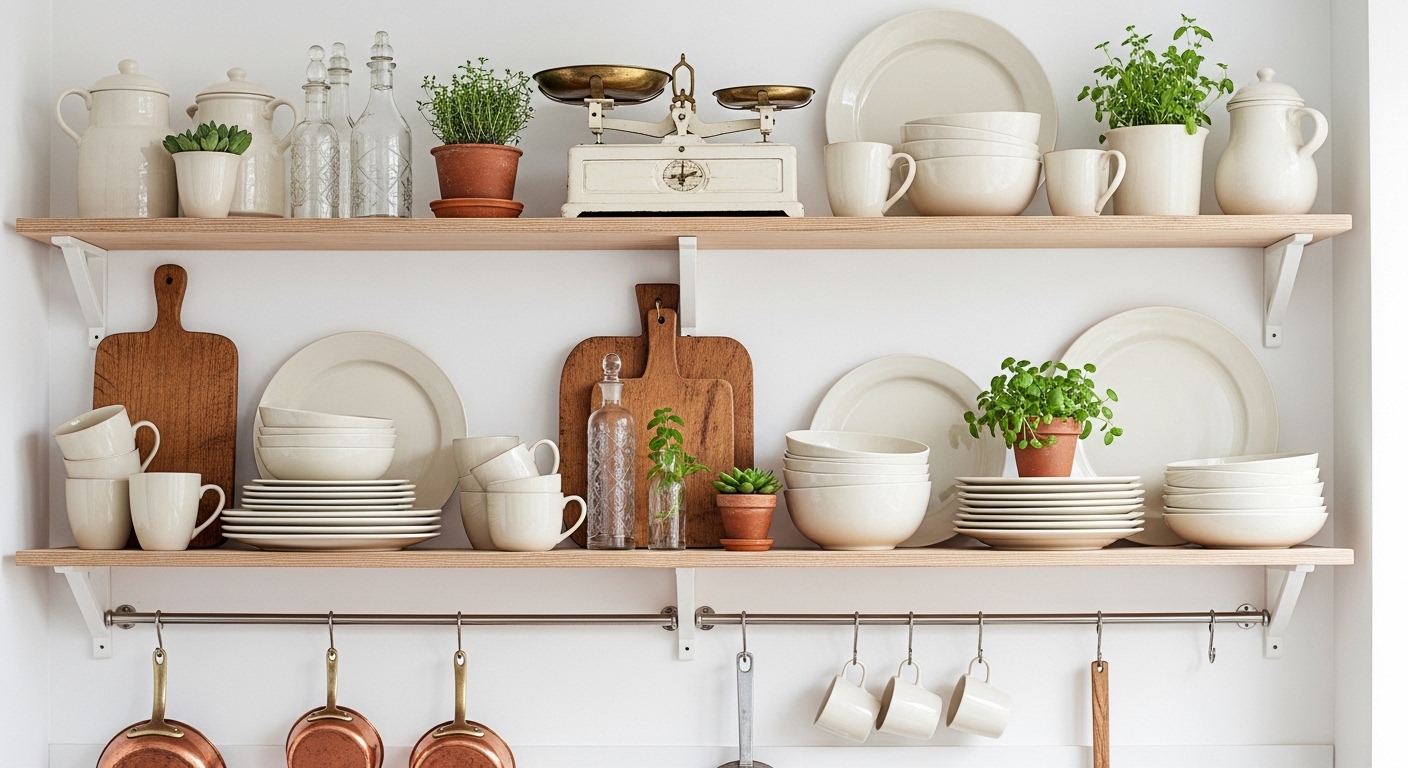
Two years ago I removed the upper cabinets on one wall and installed open shelves. Removing the uppers and fitting solid oak shelves cost about $400. The good: the kitchen feels dramatically more open. When the shelves are well-styled, about 70% of the time. The kitchen looks like a magazine. The honest part: the other 30% they look like a garage shelf. Open shelves don't hide anything.
The System That Made It Work
A wall vases in consistent natural oak gives enough visual structure that even imperfectly styled, it doesn't look chaotic. The wood tone anchors the wall. I followed it with a matching minimal home edit in the adjacent dining area for books and plants. Now the two spaces read as intentional.
My rule: top shelf is decorative only (a plant, a bowl, something beautiful I never touch). Middle shelf holds daily items, always returned to exactly the same spot. Bottom shelf is practical, cutting boards, bread, everyday chaos. Nobody looks at the bottom shelf.
Shop This Post
Naomi at Nest by Naomi covered small kitchen open shelving in a Brooklyn apartment, a useful perspective on scale and density from a space-constrained kitchen.
Frequently Asked Questions
Are open shelves in kitchens a good idea?
Open shelves work well if you're willing to keep them chosen. They show everything, clutter is always visible. Keep about 60% capacity and commit to a weekly reset.
How do I style open kitchen shelves?
Use the rule of three: stack plates vertically, mix heights with glasses and jars, add one decorative item per section. Keep a consistent color palette.
What should I put on open kitchen shelves?
Everyday dishes, glasses, and a few beautiful items you actually use. Avoid storing things you rarely use, open shelves are display, not storage.