The bar stool height guide that would have saved me two returns is one measurement: the clearance from the floor to the underside of the counter overhang, minus 10 to 12 inches, is the seat height you need. Standard kitchen counters at 36 inches take a counter stool with a 24 to 26 inch seat; bar-height counters at 40 to 42 inches take a bar stool with a 28 to 30 inch seat; table height at 30 takes a chair. I bought stools twice and returned them twice, on different occasions, for the same mistake: I measured the counter's top and not the underside, and the first set hit the overhang at the knees and the second left my daughter's chin at the counter. This post is the measurement and how to take it, the three heights and their names, knee room, how many stools fit and how to count, seat width and spacing, backs and no backs and swivels, footrests and where they should be, the island with the overhang and the one without, the stools we have and why four, the materials that survive a kitchen, the pendants over them and the eyeline, kids and stools, mistakes and what the two returns cost.
The one measurement
Measure from the floor to the underside of the counter's overhang, not to the top. On our island the top is 36 inches and the underside, with the butcher block and the support, is 34.5. Subtract 10 to 12 inches for knee room: 22.5 to 24.5, so a 24-inch seat. The first stools I bought were 26-inch counter stools chosen from the counter's top height, and they hit the 34.5-inch underside with 8.5 inches of clearance, which is a thigh in a vice. The second were 22-inch, chosen in overcorrection, and put an adult's elbows at counter height. Twenty-four, and they've been there a year with no complaints from anyone who has sat in them.
The three heights, and what they're called
Counter stools: seat 24 to 26 inches, for counters and islands at 35 to 37, which is almost every kitchen counter. Bar stools: seat 28 to 30, for bar-height counters and raised island ledges at 40 to 43, which is the two-tier island of the 2000s and the actual bar. Table or chair height: seat 18 to 19, for a 29 to 30 inch table. The names get misused, "bar stool" for all of them, and a bar stool at a kitchen counter puts the seat 6 inches too high, which was the third mistake I nearly made. Spectator height, 33 to 34 inch seats, exists for 44 to 47 inch counters and almost nobody has one.
Knee room: 10 to 12 inches
The gap between the top of the seat and the underside of the counter should be 10 to 12 inches for an adult: less than 9 and thighs are pinned, more than 13 and elbows are on the counter and the sitter looks like a child at a grown-up table. If the stool has a cushion, measure to the top of the cushion compressed, which is an inch less than it looks. If the counter has a thick apron or a support bracket under the overhang, measure to the lowest thing, which on our island is the bracket at 34.5 and not the butcher block at 35.
How many stools fit
Measure the overhang's length, subtract 12 inches for the two ends so nobody sits half off the counter, and divide by 28, which is the space one seated adult needs including elbows, or by 24 for stools without arms and people who like each other. Our overhang is 96 inches: minus 12 is 84, divided by 28 is three, and we have four, at 24-inch spacing, without arms, because one is my daughter and because four was the number the island wanted visually. Stools with arms or swivels need 30 inches each. Round stools tuck tighter than square ones.
Seat width and spacing
A stool seat is 15 to 18 inches wide; leave 6 inches between seats minimum, so with 17-inch seats the centers are 23 to 26 apart. Stools that touch look like a bus queue; stools 10 inches apart look like nobody talks. The spacing should also line up with the pendants above if there are pendants, which there are; ours are two pendants at 30 inches apart over four stools at 24, and the pendants are centered on the island, not the stools, which is the right call because the stools move and the pendants don't.
Backs, no backs, swivels
Backless stools tuck fully under the counter and disappear, which in a kitchen you look at from the living room is the argument for them; they're also the ones nobody sits on for more than twenty minutes. Low backs, 6 to 10 inches above the seat, tuck under a counter with a deep overhang and support a lunch. Full backs are dining chairs at counter height and make the island a table, which is fine if the island is where dinner happens. Swivels are for a kitchen where people turn to talk to the living room, and they're the ones that get spun by children until they wobble. Ours are low-back, no swivel, and they tuck under the 12-inch overhang to the back of the seat.
Footrests
A stool without a footrest is a stool for people with long legs; the footrest should be 16 to 18 inches below the seat, which puts a seated adult's feet at rest with the knees at about 90 degrees. On a 24-inch seat that's a rail at 6 to 8 inches from the floor. Metal rails scratch the floor's finish when the stool is pushed in; a rail with a rubber sleeve, or a rug runner under the stools, and the oak floor under ours has a runner that's the only rug in the kitchen.
The island with an overhang, and the one without
Stools need a 12-inch overhang minimum to sit under, 15 for a full-back stool, and an island with a flush edge and no overhang is a counter you stand at, whatever the catalog shows. Ours has a 12-inch butcher block overhang on brackets, which is why the underside measurement includes the bracket. If your island has no overhang, a 12-inch extension on brackets is a $200 change and the difference between an island and a table; without it, buy no stools, because they'll live against the wall.
The stools we have, and why four
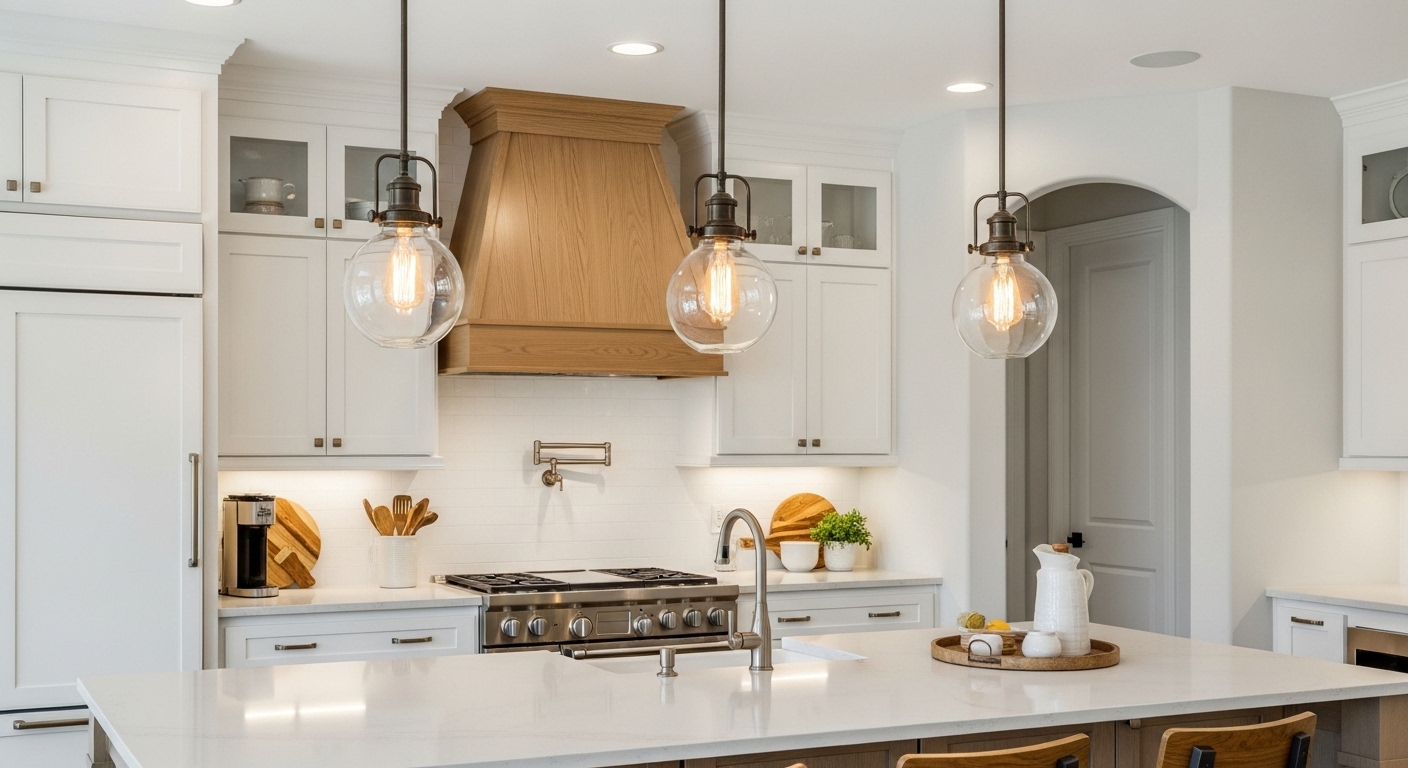
Four counter stools with 24-inch seats, low backs, oak with black steel legs, 17 inches wide, no arms, at 24-inch centers under a 96-inch overhang, with two brass glass pendants above. Oak and black to match the counter and the faucet, the second metal being the brass above, which is the two-metal rule from the faucet post. Four because three looked like a mistake on a 96-inch island and five didn't fit anyone's elbows, and because there are three of us plus a friend most afternoons.
Materials that survive a kitchen
Oak seats, oiled, which wipe and take a spill; steel legs with rubber feet; no upholstery, because a stool seat is where the ketchup goes; if upholstered, a performance fabric or leather, and the leather is the one that ages well. Cane and rattan seats are lovely and sag in two years under an adult; woven cord is better. Fully metal stools are cold to sit on in a Portland February, which is why the oak. The finish on the legs matches the faucet, which is the thing that makes four stools look like part of the kitchen rather than four objects in it.
Trying before buying, without the returns
Stack books on a dining chair to the seat height you've calculated and sit at the island for a meal; if your knees touch, go down an inch, and if your elbows are on the counter, go up. Then measure the overhang and put a strip of tape on the floor every 24 inches to see the count. It's a Saturday breakfast with a chair and a tape measure, and it's the return I'd have saved twice. Order one stool first if the shop allows it, sit on it for a week, and then order the rest.
The pendants and the eyeline
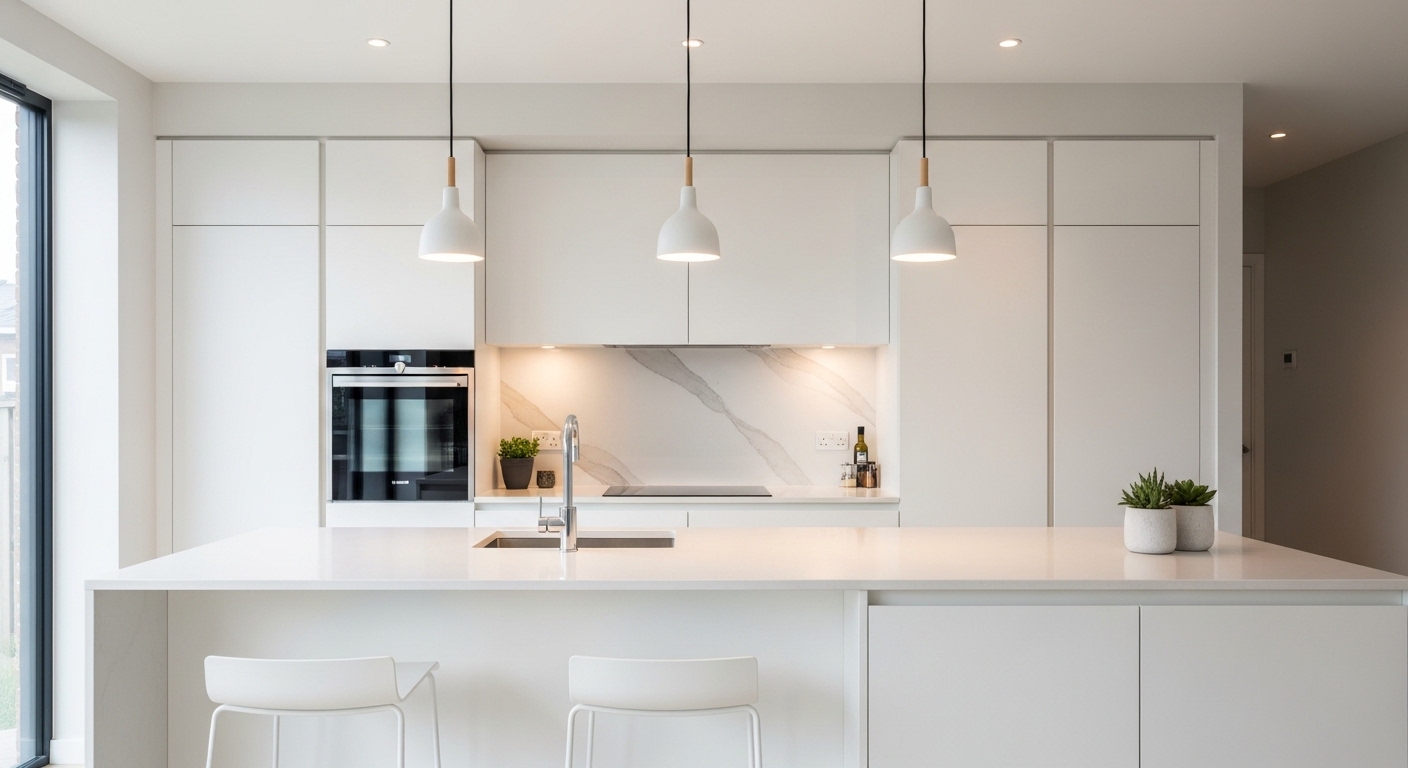
Pendants over an island with stools have to clear the eyeline of a seated person, which on a 24-inch stool is about 48 inches from the floor: pendant bottoms at 66 to 70 inches, or 30 to 34 above the 36-inch counter, so the shade is above the seated eye and the bulb is hidden by it. The pendant post is the sizing; the stool point is that the stool height sets the pendant height, and if you change the stools you may be changing the pendants. Ours are at 68 inches to the bottom of the shade, and a seated person looks at the counter under a cone of light and not into a bulb.
Kids and stools
A nine-year-old on a 24-inch stool has her feet on the footrest and her chin above the counter, which is right; at six she needed a stool with a lower rung, and the answer was a step stool kept beside the island rather than a shorter counter stool that would have been wrong for the adults. Backless stools and swivels are the ones children fall off; a low back and no swivel, and a rule about not standing on them, and the stools have survived four years of a child with no incident but the ketchup.
Adjustable stools, and why I'd skip them
Gas-lift adjustable stools solve the height question by not answering it, and they solve it for about two years, after which the lift sags and the seat drifts down under an adult through a meal. They also look like office furniture and swivel by nature. If the counter is a true oddity, 38 inches say, a fixed stool at 26 with a cushion is closer than an adjustable one that's right for a year; and most "odd" counters are 36 measured wrong.
The quick table
Counter at 35 to 37 inches: seat 24 to 26. Counter at 40 to 43: seat 28 to 30. Table at 29 to 30: seat 18 to 19. Knee room 10 to 12 from seat top to underside. Overhang 12 inches minimum, 15 with a back. Stools 24 to 28 inches on center, 12 inches lost at the ends. Footrest 16 to 18 below the seat. Pendant bottoms 30 to 34 above the counter. Measure the underside, not the top, and measure it once with a tape and once with the stool's own spec sheet in the other hand.
Mistakes
Measuring the counter top, twice. Buying 26-inch stools for a 34.5-inch underside. Buying 22-inch stools to fix it. Nearly buying bar stools because the store called them all bar stools. Swivels for a month, spun. And ordering three, because the math said three, before standing at the island and seeing that the island wanted four.
Cleaning and the ketchup
Oak seats get oiled twice a year with the counter, and wiped daily; the steel legs get the rubber feet checked when they start to scratch. A stool that lives under a counter collects crumbs on the seat, and pulling all four out on Sunday to sweep under the island is the one chore the stools added. Upholstered stools in a house with a nine-year-old are a decision to own a stain, and the oak is why ours have none.
What the two returns cost
Two sets of four stools, $320 and $280, both returned with restocking fees and one shipping charge, about $90 in fees and a month of eating standing up. The stools that stayed, $380 for four. If I'd measured the underside once, the total would have been $380 and a week. The measurement is on a piece of tape on the inside of a kitchen drawer now, with the pendant heights, so nobody in this house measures the top of the counter again.
Shop this post: kitchen pendant lighting hung to clear the seated eyeline