Biophilic design is the practice of building spaces that connect to nature through daylight, natural materials, living things, natural shapes and textures, and views, and it is not the same as owning plants. My house had the plants, four pothos, a snake plant and a monstera, under $150 all in, and it had no cohesion: the plants were there and felt like they'd wandered in from outside rather than belonging. What made the difference was five changes that cost about $600 together, in this order: sheer curtains instead of heavy ones, a solid oak side table instead of glass, a rattan pendant over the dining table, a piece of raw stone near the monstera, and warm bulbs everywhere. This post is what biophilic design actually means and where the term comes from, the six elements and which ones a normal house can do, daylight first and why it's free, materials, the plants and how to group them so they read as a design rather than a collection, natural shapes and the rattan pendant, texture, views and the window, water and sound, the bedroom and the bathroom versions, what it isn't, mistakes, what it cost, and what changed in a 1964 ranch that had never heard the word.
What biophilic design means, and where it comes from
The term comes from "biophilia," the idea that people have an innate pull toward living things and natural environments, popularized by the biologist E.O. Wilson in the 1980s, and it was picked up by architects and interior designers who noticed that offices and hospitals with daylight, plants and wood measured better on almost everything from recovery times to concentration. In a house it's simpler: a considered approach to making rooms feel connected to the outside through light, materials, living things, shapes and textures. The research behind it is real and mostly about workplaces; the home version is a set of choices that make a room feel like somewhere you can breathe, and the choices are cheaper than the word suggests.
The six elements, and which ones a normal house can do
Daylight and the changes of light through the day: doable in any house, free. Natural materials, wood, stone, wool, linen, clay, rattan: doable, gradually, as things get replaced. Living things, plants and, if you're that person, an aquarium: doable, cheap. Natural shapes and patterns, curves, woven textures, the irregularity of real things: doable through a few objects. Views and a connection to the outside, a window onto something green: partly doable, depending on the window. Water, the sound and sight of it: the one most houses skip, and a small fountain or an open window in rain does it. Ours has five of the six, and the water is the rain on the porch roof.
Daylight first, because it's free
I removed heavy linen curtains from the living room and dining room and replaced them with sheers, white linen-look panels on the same rods. Free, an afternoon, and an immediate difference: the rooms filled with the changing light of a Portland day, grey and silver and briefly gold, and the plants started facing the windows. A 1964 ranch has big windows and low ceilings, and the heavy curtains had been shrinking the rooms for years. The rule for a biophilic room is that the daylight is the main light until it isn't, and everything electric is for after. Blinds up in the day, sheers for privacy, and the heavy curtains in the bedroom only, where sleeping in matters.
Natural materials, one swap at a time
A solid oak side table replaced a glass one, and the living room got a surface that's warm to the hand and takes the light. A piece of textured stone, a river rock the size of a loaf, on the floor near the monstera, which sounds like nothing and turned out to be the object people pick up. A wool rug in place of a synthetic one. A rattan basket for the throws. A clay pot instead of a plastic one for the snake plant. None of these was expensive and none happened at once; the rule is that when something breaks or gets replaced, the replacement is a natural material, and after three years the living room is oak, wool, rattan, clay and linen with two things that aren't.
The plants, and how to group them
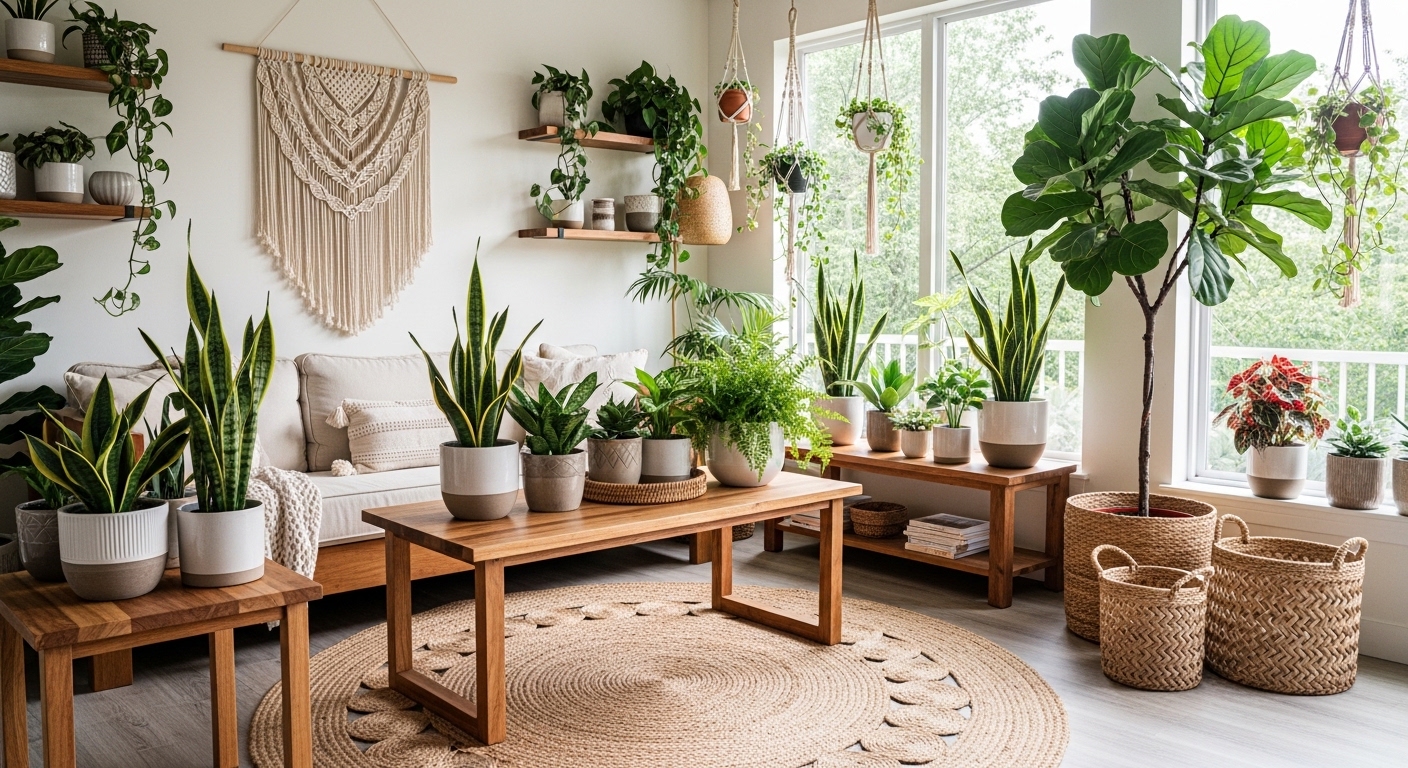
Four pothos, a snake plant and a monstera scattered one per surface look like a collection; the same six grouped in two clusters look like a design. The monstera, the snake plant and one pothos together in the corner by the window, at three heights, on the floor, on a stool and on a shelf. The other three pothos trailing from one high shelf in the kitchen. Two groups, not six singles, and the room reads as having plants rather than being decorated with them. The practical rules: group by light needs, put the big one on the floor, use pots in one material, and let something trail. Total plant spend, under $150, and the pots were more than the plants.
Natural shapes: the rattan pendant
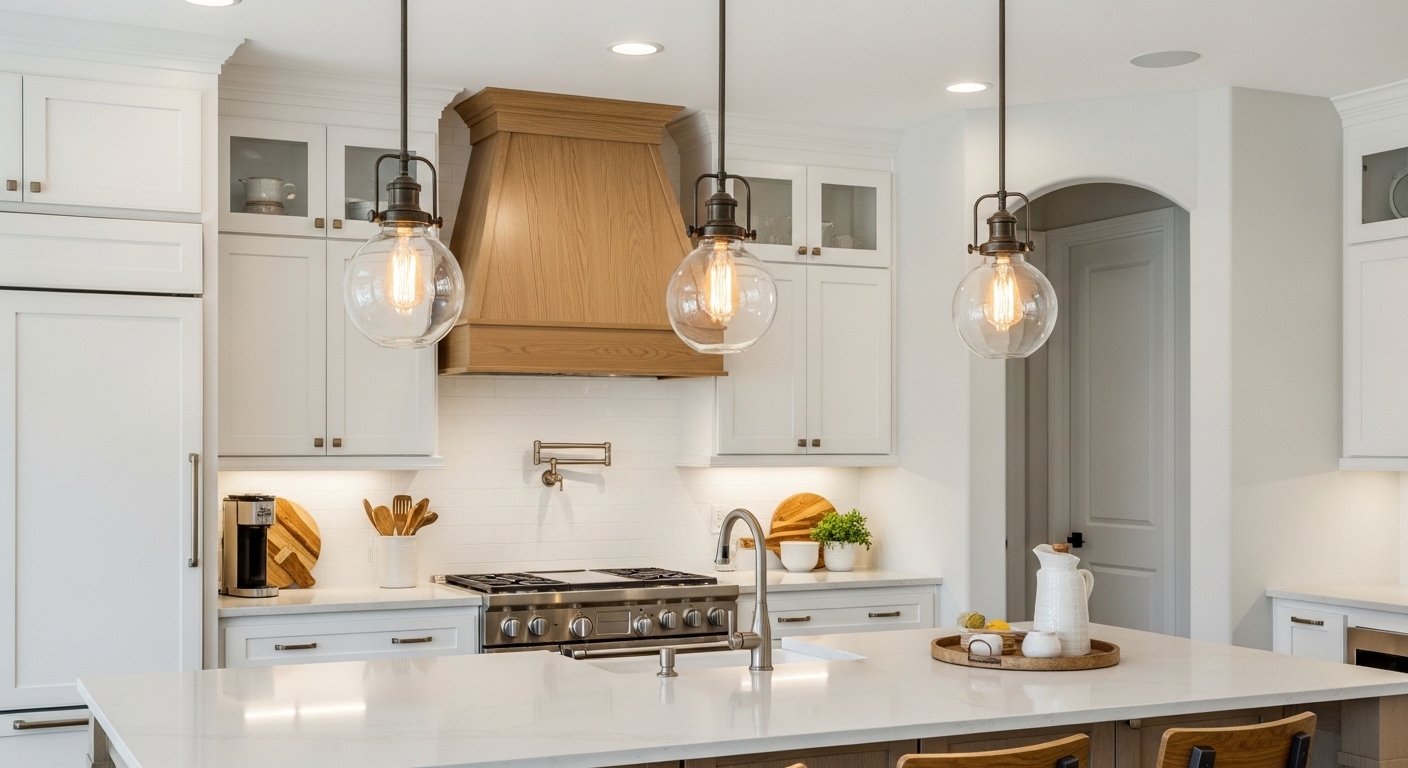
The single easiest biophilic upgrade is one fixture swap. I added a woven rattan pendant over the dining table, 20 inches across, hung 32 inches above the table on a dimmer, with a 2700K bulb, and it changed the entire feeling of meals in that room: the weave throws a soft pattern on the ceiling and the table, the shape is round and irregular where the old fixture was square and precise, and the material is the same family as the basket and the stool. A pendant with natural materials, rattan, woven grass, wood, paper, brings natural texture overhead, which is the one place in a room that's otherwise all flat paint. The pendant post is the sizing and the height; the biophilic point is the material.
Texture, which is what you touch
Biophilic rooms are rooms you want to touch: the grain of the oak, the nap of the wool, the rough stone, the weave of the rattan, the linen of the sheers. Texture is also what side light reveals, and the two wall sconces flanking the sofa at 62 inches make the rug and the linen visible in a way the ceiling light never did. Smooth, glossy surfaces, glass, lacquer, chrome, read as manufactured and are the opposite of the point; a biophilic room can have one or two, and ours has the television and the faucet.
Views, and the window as the picture
The living room window looks at a maple and a neighbor's fence, and the sofa used to face the television with its back to the window. It's turned now, at a right angle, so the window is in view from the seat, and the television is on the side wall. The window is the picture, and the maple does something every month that a print never does. If the view is a wall, a window box with something green, or a plant on the sill that's the first thing you see, does a smaller version of the same thing. A biophilic room is arranged around what's outside before what's inside.
Water and sound
The element most houses skip. A small tabletop fountain is the usual answer and I don't have one, because I have a porch roof that rain drums on and a window that opens, and in Portland that's water and sound eight months a year. The other version is an aquarium, which my daughter campaigns for and which would be the most biophilic object in the house and the most work. If the house is silent and dry, a fountain in the entry is $60 and does more than it should.
The bedroom and the bathroom versions
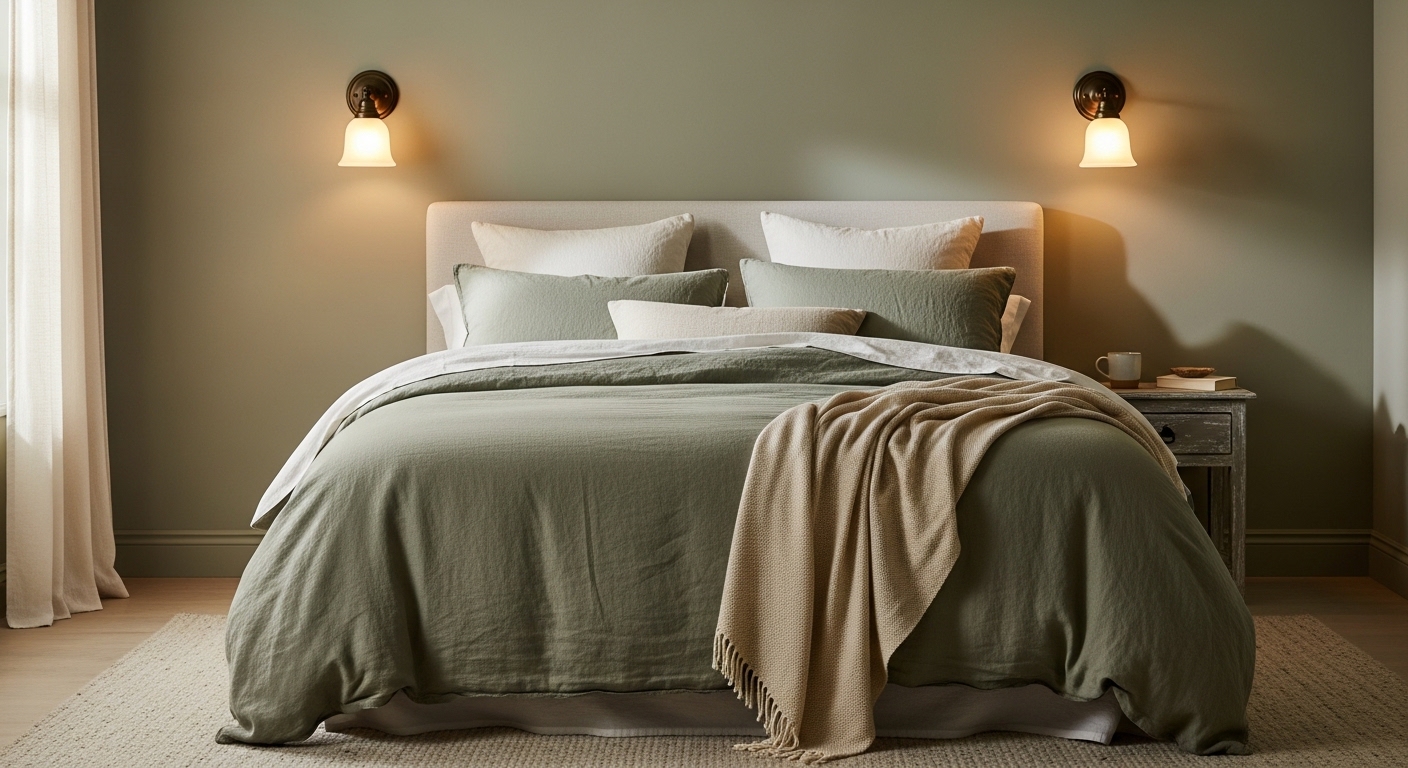
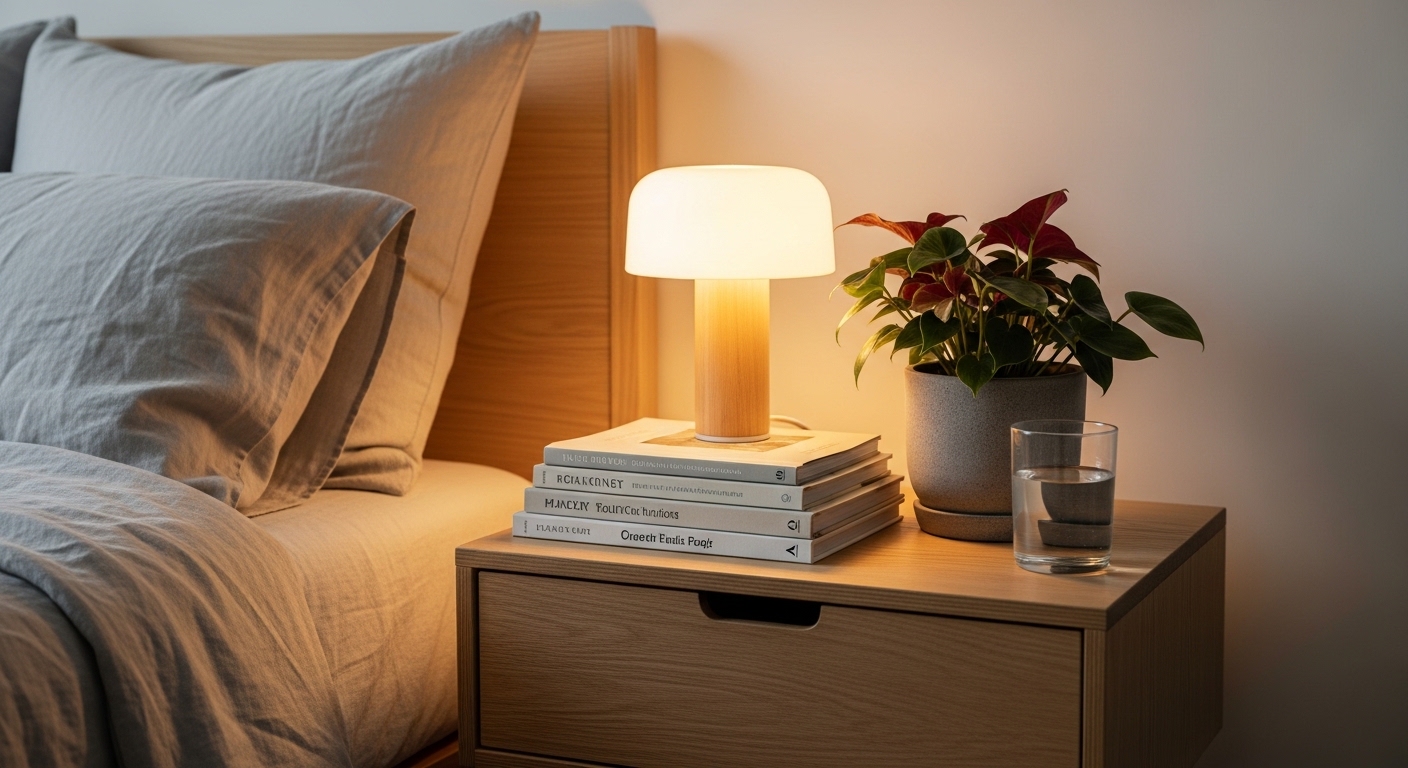
The bedroom: linen on the bed, a wool rug, an oak headboard, the heavy curtains here and nowhere else, one plant that likes low light, and warm sconces at 2700K instead of the ceiling light. The bathroom: a plant that likes steam, a wooden stool, cotton towels in a natural color, a stone soap dish, and 3000K at the mirror; the bathroom post has the rest of that room. The bedroom is the easiest room to make biophilic because it's the room with the most fabric, and the bathroom the hardest because it's tile and chrome by nature.
Light after dark: the biophilic version of electric light
Daylight changes color through the day, warm at the ends and cool in the middle, and the electric light that feels natural does the same: 3000K in the kitchen at noon, 2700K in the living room at seven, 2400K by the chairs at ten, all on dimmers, and the ceiling light off after dark. Light from the side and from below, the way the sun does at the ends of the day, which is what sconces and lamps do and ceiling fixtures don't. And a timer that brings the lamps up before dusk so the change from daylight to lamplight is gradual, which is the single cheapest biophilic move after the sheers. The sconces versus ceiling lights post is the long argument; the short one is that a ceiling fixture at noon-white all evening is the least natural light there is.
Biophilic design in a rental or on a small budget
Sheers on tension rods, $40. Two plants grouped on a stool and the floor, $40. A wool or jute rug, $100 secondhand. A rattan basket and a clay pot, $40. A plug-in rattan pendant on a swag hook over the table, $110. A stone from somewhere you've been, free. Warm bulbs, $20. About $350, no holes, and the room reads as connected to outside. The living wall and the reclaimed-wood feature wall in the magazines are $4,000 versions of a $40 idea, and the $40 version is the one that lasts a move.
What biophilic design isn't
It isn't a jungle. A room with forty plants is a greenhouse, and a greenhouse isn't restful. It isn't a theme: no leaf-print wallpaper, no wooden signs about nature, no faux plants, which are the exact opposite of the idea. It isn't expensive, or shouldn't be; the word has been attached to $4,000 living walls and it means sheers and a stone. And it isn't a style, it's a set of choices that sit under any style; a modern room can be biophilic and a farmhouse room can fail to be.
Mistakes
The six plants one per surface, for two years. A faux olive tree, which was in the house for a month before I understood why it bothered me. Glass and chrome side tables, which I'd chosen because they "disappeared" and which disappeared the warmth with them. The sofa with its back to the window. And a 4000K bulb in the rattan pendant the first week, which made the weave look like a lampshade in a shop; 2700K made it a nest.
What it cost
Sheers for two rooms, $80. The oak side table, $160 secondhand. The rattan pendant, $190. The stone, free from a riverbank in the Gorge. Pots in clay, $60. The wool rug, $220. Plants, under $150 over three years. About $860 for a house that now feels connected to the outside, and the sheers were $80 of it and the change I'd make first in any house. The sconces that make the texture visible were a separate budget and are in the living room sconce post.
What changed in a 1964 ranch
The rooms got quieter, in the sense of calmer; people sit longer; the plants grew, because they face the windows now; and dinner under the rattan pendant takes twenty minutes longer than it did under the square fixture. A house built in 1964 with big windows and low ceilings was already halfway to biophilic and had been decorated against it for sixty years. Sheers, oak, rattan, a stone and warm light finished the job, and the word turned out to mean something you can do in an afternoon.
Shop this post: pendant lights in natural materials and wall sconces for the side light that shows texture