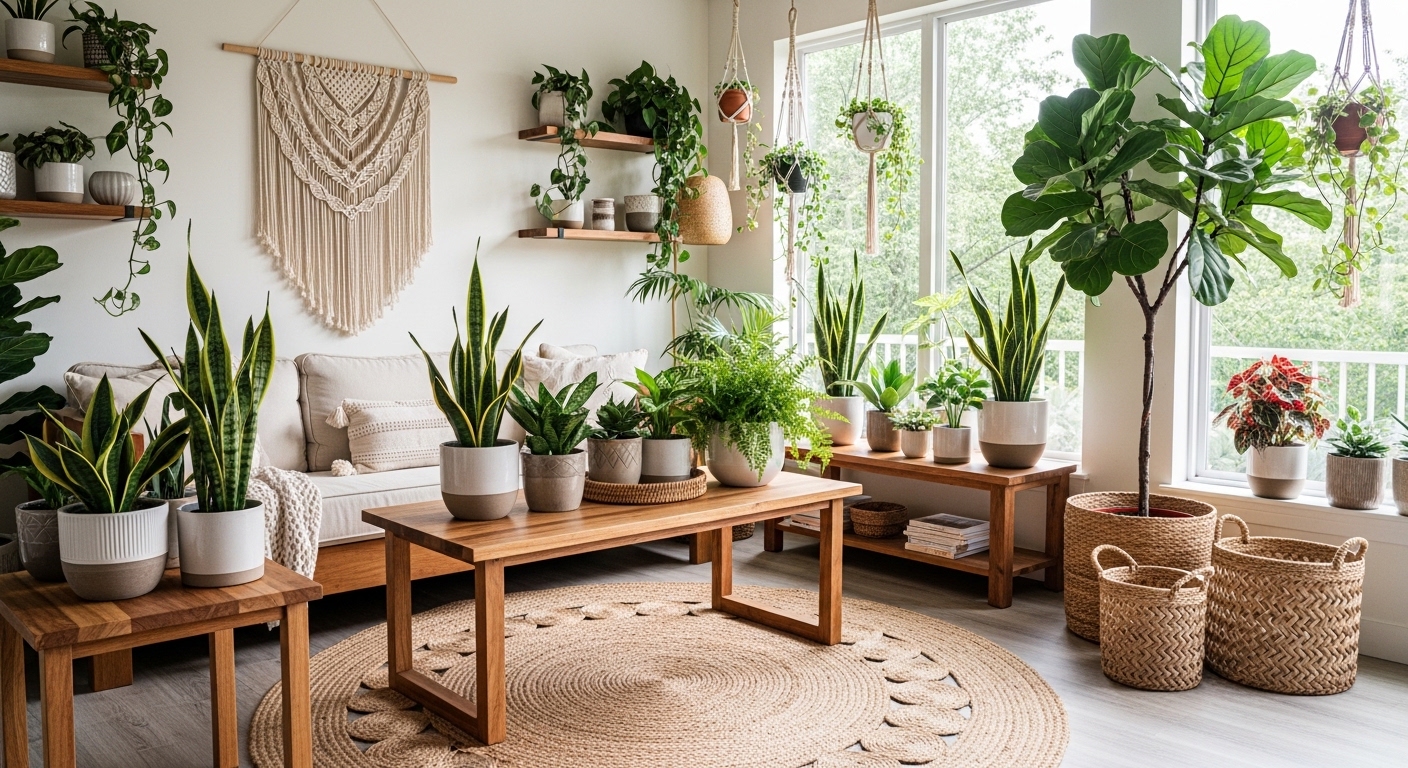
My house had the plants, four pothos, a snake plant, a monstera. All in, those plants cost me under $150. What it didn't have was any cohesion. The plants were there but felt like they'd wandered in from outside rather than belonging.
Biophilic design isn't just "have plants." It's a considered approach creating spaces that feel connected to nature through materials, light, shapes, and textures.
The Changes That Made It Work
Natural light first: I removed heavy linen curtains and replaced them with sheers. Free, takes an afternoon, immediate difference. Then natural materials, a solid oak side table replaced a glass one. Textured stone as a decorative object near the monstera.
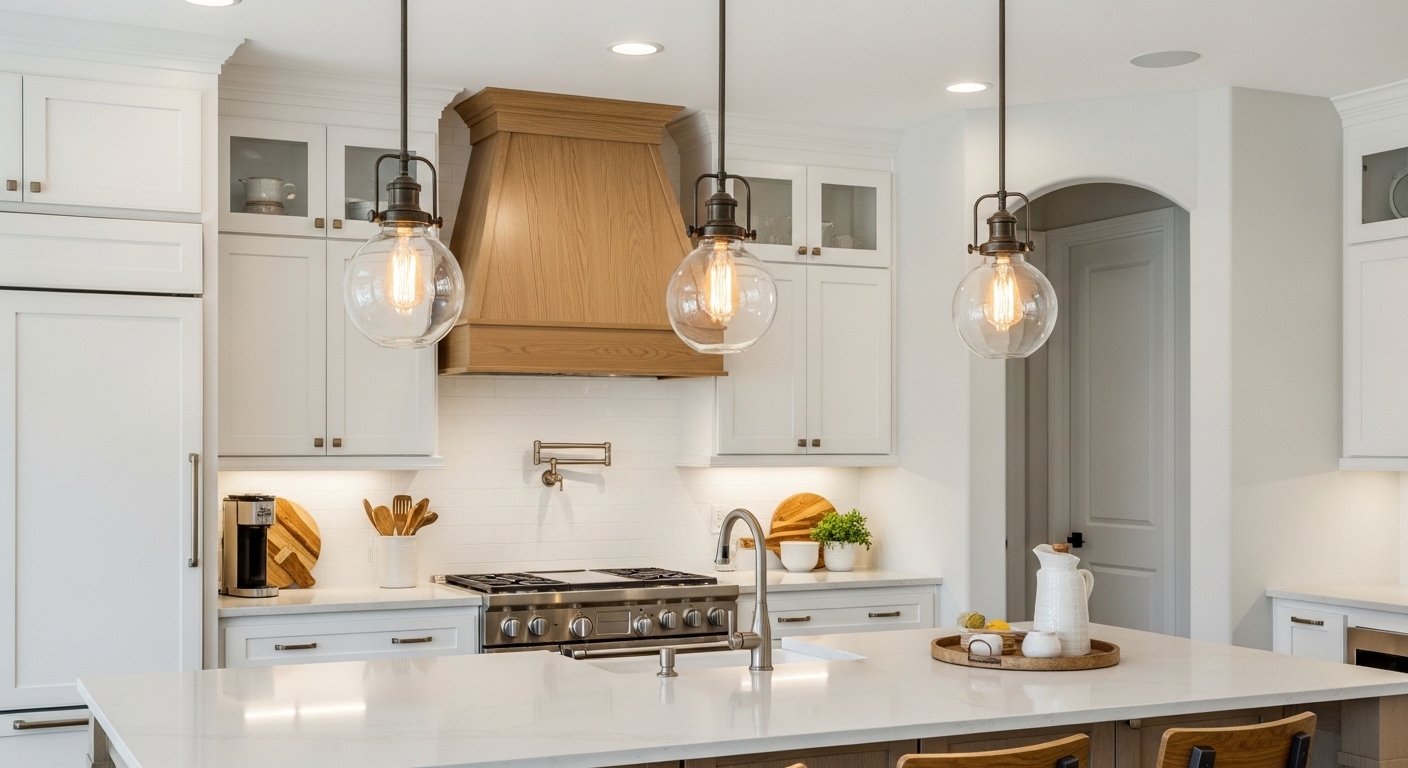
Then lighting. The biophilic lighting collection at BO-HA includes pendants with rattan, woven materials, and wood, fixtures that bring natural texture overhead. I added a woven rattan pendant in the dining area and it changed the entire feeling of meals in that room. A pendant with natural materials is the single easiest upgrade: one fixture swap and a room reads completely differently.
Shop This Post
Frequently Asked Questions
What is biophilic design?
Biophilic design incorporates natural elements, plants, natural light, wood, stone, water, organic patterns, to create spaces that feel connected to the natural world. Research shows biophilic environments reduce stress and improve wellbeing.
How do I add biophilic design to my home?
Start with natural light. Add plants. Choose materials like wood, stone, rattan, and linen over synthetic alternatives. Use organic shapes. Small shifts accumulate into a meaningfully different environment.
What plants work best for biophilic design indoors?
Low-maintenance: pothos, snake plants, monstera, ZZ plants. For something sculptural: fiddle leaf figs, bird of paradise. The best plant is one you'll keep alive.