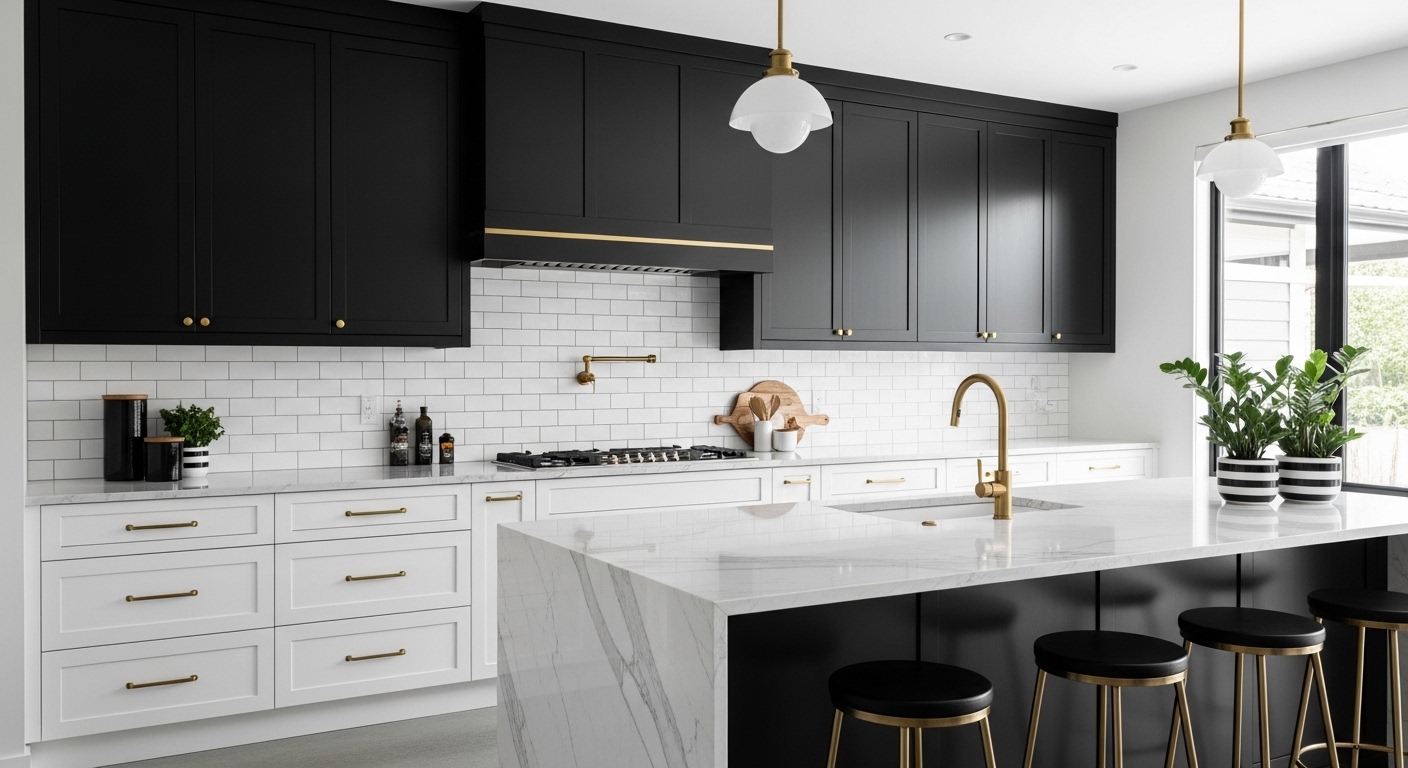
Both sophisticated black and white kitchens and 1950s diners are high-contrast, graphic, black and white. What separates them is material language and color proportion.
Checkerboard floors: diner. Large-format stone tile in light tones: modern. White subway tile with black grout: retro at classic dimensions, contemporary at elongated format. Flat-front matte black cabinetry: consistently modern. High-gloss black: bold but potentially dated.
The black kitchen pendant lights shows how the right accessories pull the palette together. A matte black faucets is the fixture that anchors the kitchen in the contemporary direction. Chrome reads as classic or retro in this scheme; matte black reads as intentional and modern.
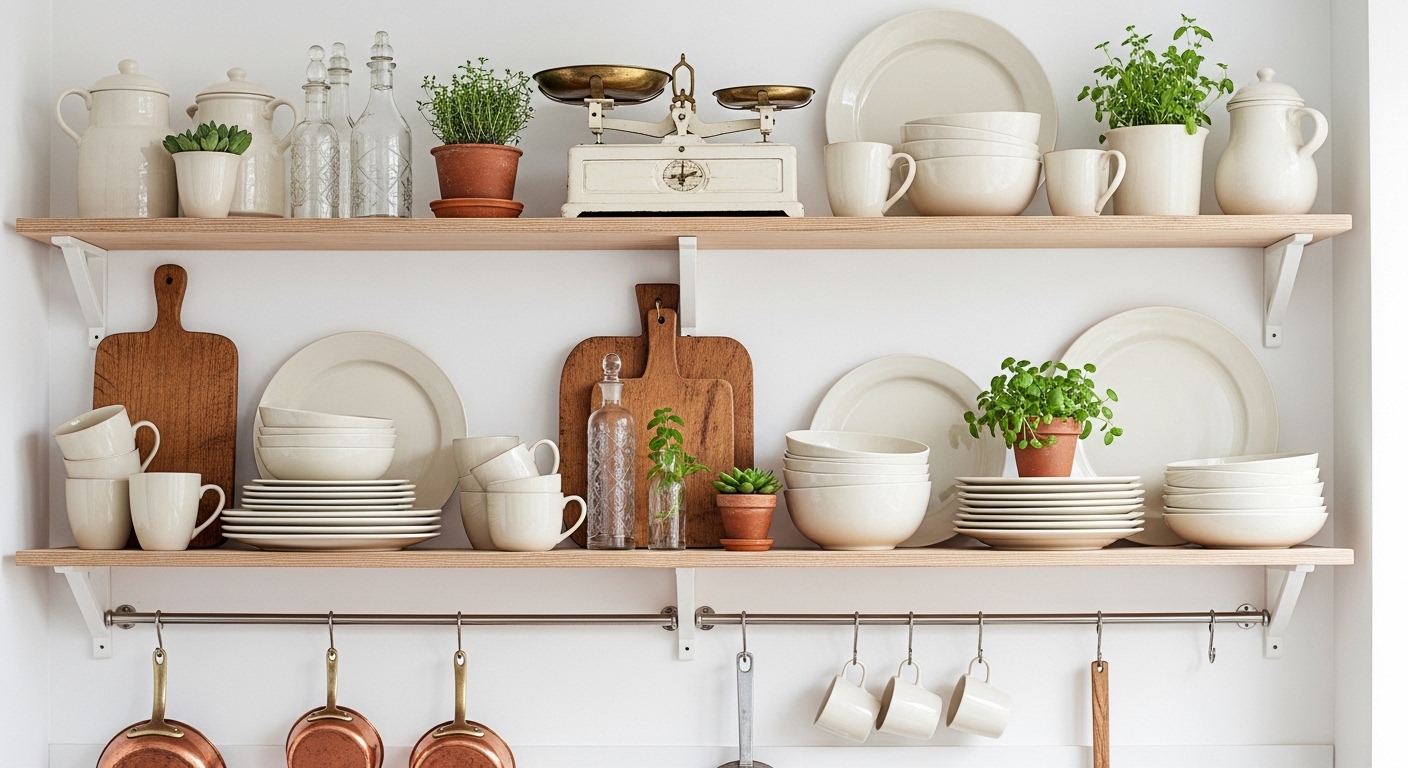
The most important addition to prevent coldness: warm wood. An open shelf in natural oak, a butcher block island top, a wooden bar stool, cutting boards on display, any introduces the organic warmth the high-contrast palette lacks on its own.
Shop This Post
Michelle at The Wharton House documented a $220 weekend kitchen refresh, useful for thinking about how far you can get without touching cabinets.
Frequently Asked Questions
How do I make a black and white kitchen look modern?
Avoid checkerboard floors and white subway tile. Instead: large-format light stone tile, flat-front cabinetry in matte (not gloss) black, warm wood accents, matte black hardware and fixtures.
Does a black and white kitchen date quickly?
The palette is timeless. It's been popular for over a century. What dates is the specific execution: checkerboard floors, certain tile patterns, particular hardware styles. The palette itself doesn't age.
What countertop works best in a black and white kitchen?
White marble or marble-look quartz adds visual warmth. Butcher block adds natural warmth and texture. The countertop should balance the dominant color.