Scandinavian lighting is a method before it's a look: no overhead light on in the evening, three layers of light at three heights, all of it warm and low, from a pendant that anchors the room, sconces or lamps at eye level, and something small and personal down by the seat. I learned it by being confused for an afternoon in a 520-square-foot Stockholm Airbnb that felt more spacious than our 1,400-square-foot Portland ranch, and working out that the difference was the light: no ceiling fixture on, a pendant over the dining table, two floor lamps, a table lamp on the counter and candles, and the apartment was not brightly lit but warmly lit, at multiple heights, from multiple directions. This post is the three-layer formula with the fixtures and the heights, why the room feels bigger and not smaller with less light, the bulbs and the temperature, the Danish word everyone quotes and what it means in practice, the candles, the pendant as the anchor, the sconces at eye level, the low personal light, dimmers, the daylight half of Scandinavian lighting, the fixtures themselves and why they look the way they do, the version for a dark Portland winter, the rental version, what it cost to do our living room, mistakes, and the evening it worked.
The Stockholm apartment
Five hundred and twenty square feet, one room plus a bedroom, white walls, pale floors, a pendant over a small table, two floor lamps in two corners, a table lamp on the kitchen counter, three candles, and a ceiling fixture I never saw switched on. It was November and dark by four. At seven the apartment was lit by five small warm sources and it felt larger than our living room, which is bigger than the whole apartment, and calmer, and I sat in it for an hour trying to work out why before I understood that the light was on the walls and the people and not on the ceiling, and that nothing in it was bright.
The three-layer formula
Overhead focal point: a pendant over the dining table or the seating area, low, on a dimmer, which is the visual anchor and the feature fixture, not the room's main light. Mid-height ambient: wall sconces at eye level, 60 to 66 inches, which put the light where your eyes spend time, on the walls around you and not the ceiling. Low and personal: a floor lamp beside the chair, a table lamp on a low surface, a bedside lamp, creating intimacy at the human level. When all three are on at low levels, the room feels as if it's glowing rather than lit, and that's the Scandinavian secret in one sentence. The ceiling light stays off, and in a Swedish apartment it's often not there at all.
Why less light makes the room feel bigger
A ceiling light lights the floor and the tops of things and leaves the walls dim, so the room reads as a lit patch with dark edges, and the edges are where the walls are, so the walls seem closer. Sconces and lamps light the walls, and a lit wall reads as the room's boundary, so the room reads as its full size. Add the glow at three heights and the eye moves around the room instead of stopping at the bright patch under the fixture. Our 1,400-square-foot ranch under its ceiling lights felt smaller than a 520-square-foot apartment with the walls lit, and it wasn't an illusion; it was where the light was.
The bulbs and the temperature
2700K, and 2400K in the low personal lights; nothing above 3000K in a room where people sit. The Scandinavians have short dark winters and a long tradition of warm light against them, and the bulbs in that apartment were all the amber end of warm. CRI 90 so the pale wood and the wool look like themselves. Low lumens: 400 to 500 per source, five sources, 2,000 to 2,500 for a room, and most of it dimmed. The sconces versus ceiling lights post is the longer argument for why the ceiling fixture is the wrong source, and the Scandinavian version is that it's the wrong source and also usually too bright and too cool.
The word everyone quotes
Hygge, the Danish one, and mys, the Swedish one, both mean something like cozy contentment and both get sold as a candle and a blanket. In practice, in that apartment, it meant the light: low, warm, several, and no one source doing all the work, so that being in the room felt like being held rather than displayed. The candles were part of it, three on the table, but the sconces and the lamps were the structure, and the candles were the last 5 percent. The word is the feeling; the method is the three layers.
The candles
Real ones, in that apartment, unscented, in plain holders, on the table and the sill, and they did what candles do: put a flickering 1800K source below eye level that no bulb replicates. At home: two on the dining table when people come, one on the coffee table in winter, never scented, and an amber filament bulb at 2200K in the low lamp for the nights without. The Scandinavians burn more candles per person than anyone in Europe, and it's a lighting decision, not a decoration.
The pendant as the anchor
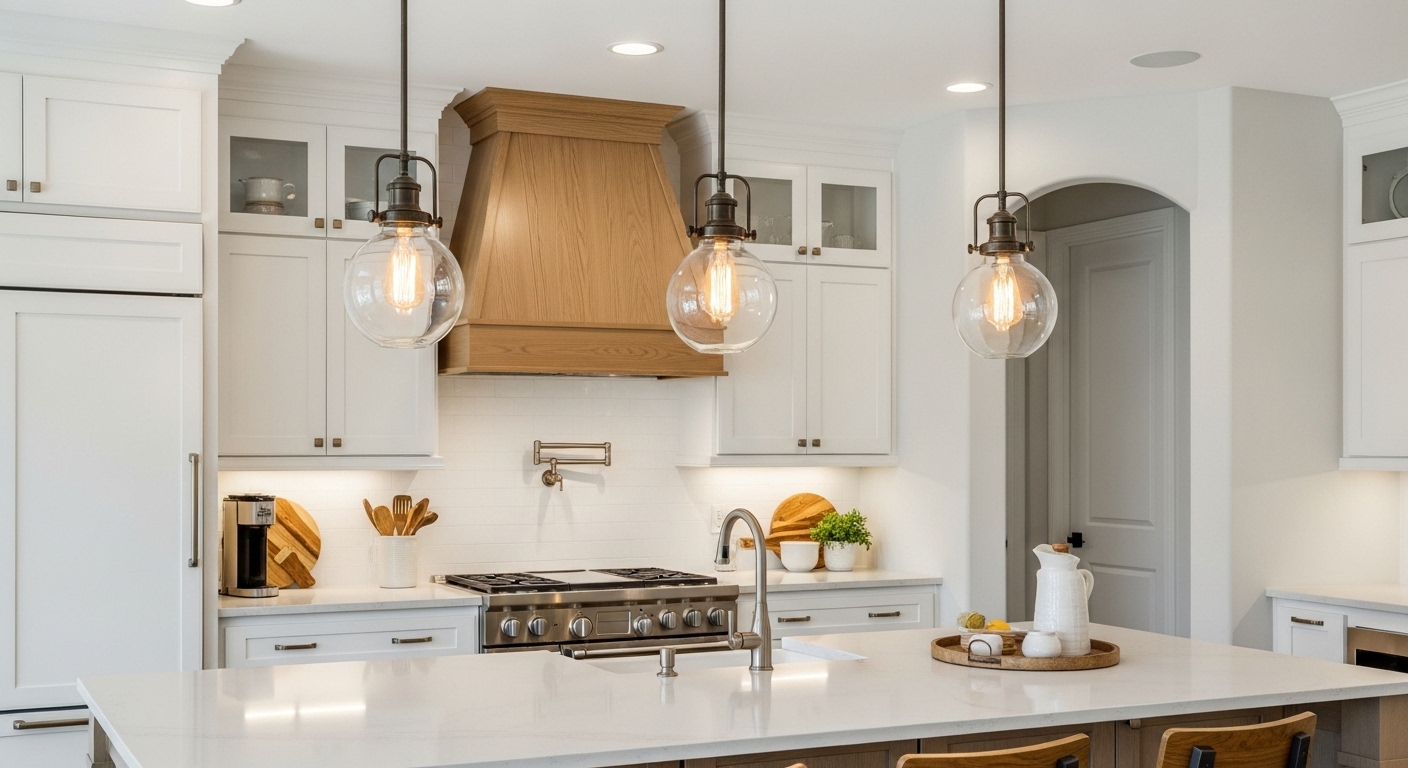
Over the dining table, hung with its bottom 30 to 34 inches above the table, on a dimmer at 40 percent in the evening, with a shade that hides the bulb from anyone seated: in Stockholm a paper globe, at home a linen drum. The pendant marks where the room's center is and lights the table and the faces around it, and it's the only light in the formula that hangs. The pendant post has the sizing; the Scandinavian rule is that it hangs low, and that it's the feature and not the flood.
Sconces at eye level
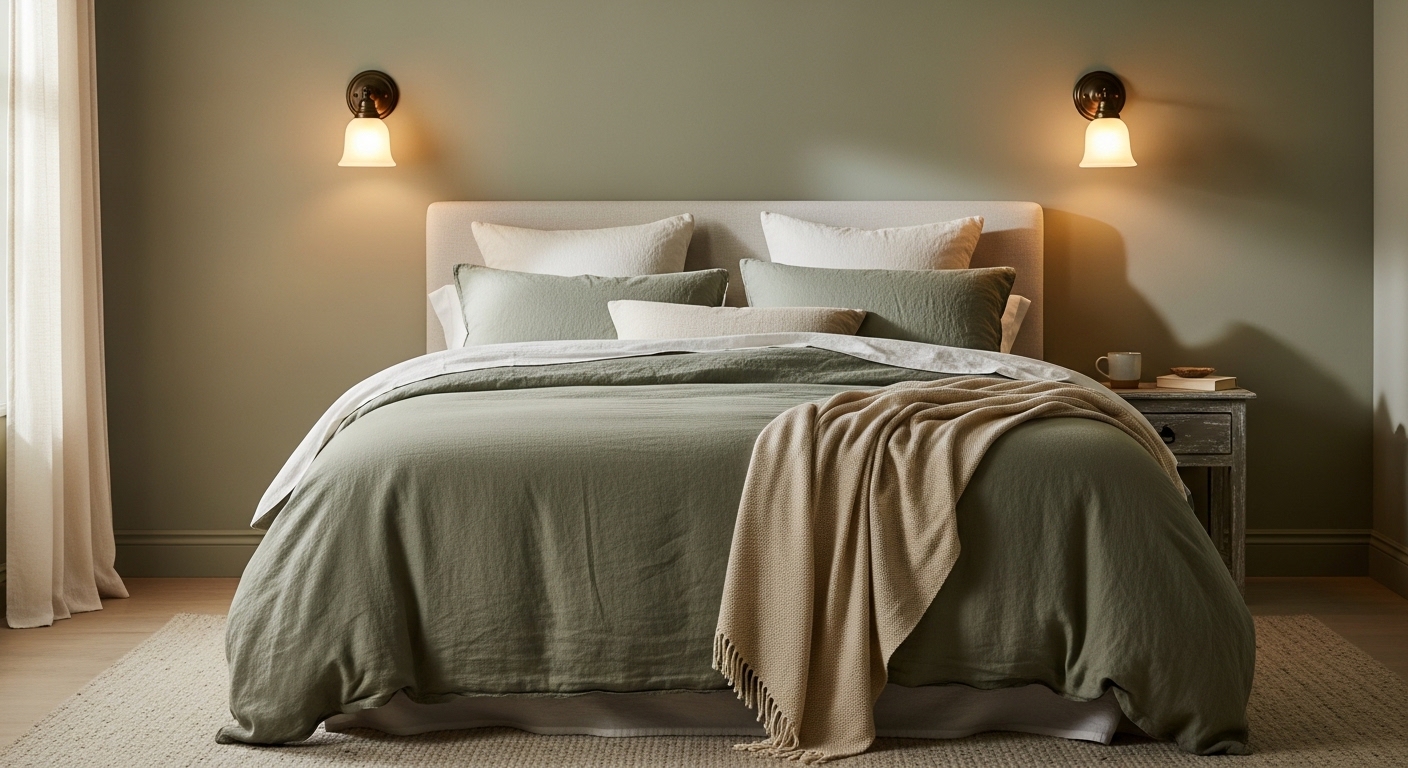
Two flanking the sofa or the fireplace at 62 inches, and one beside the reading chair, all 2700K on one dimmer, at 30 percent by nine. They light the wall behind the sofa, which is the wall you look at from the chairs, and they put the light at the height of the people. In the apartment it was two floor lamps doing this job; at home it's the sconces, because the floor lamps ate the floor. The placement rules are the heights; the Scandinavian addition is that they're the room's main light, not an accent.
The low, personal light
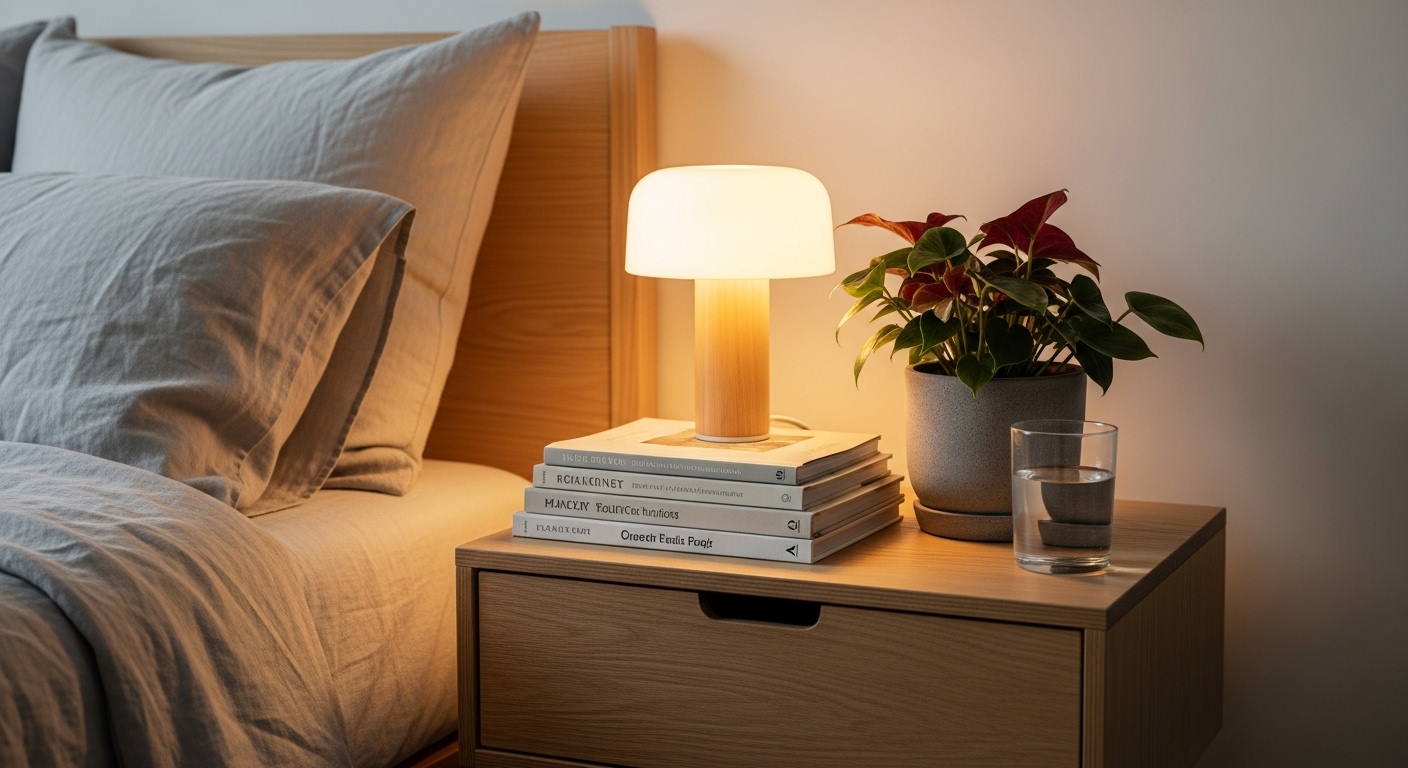
A table lamp on the counter at 40 inches, a small lamp on the floor behind the sofa pointed at the wall, the bedside lamps: sources below eye level that create the intimacy the ceiling can't. This is the layer most rooms lack and the one that makes the difference between lit and glowing. A $29 ceramic lamp on the floor behind the sofa with a 2400K bulb is the cheapest and most effective thing in this post, and it's the light guests ask about.
Dimmers
Every layer on its own dimmer, because the formula only works at low levels and a lamp without a dimmer is a lamp at full. The pendant on a wall dimmer, the sconces on another, the lamps on plug-in dimmers, and the evening at 30 to 40 percent across the board. The Stockholm apartment had a dimmer on the pendant and the lamps at low wattage by design; at home the dimmers are the $90 that made everything else work, and the flush mount post is the one ceiling fixture we kept, on a dimmer, for finding things.
The daylight half
Scandinavian lighting is also about daylight, because there's so little of it: white walls, pale floors, sheer curtains or none, mirrors opposite windows, and nothing blocking a window. In the apartment the windows were bare and the walls were white and the November light, such as it was, went everywhere. At home the heavy curtains became sheers and the sofa turned to face the window, which is in the biophilic post; the electric layers are for after four, and the daylight is the first layer until then.
The fixtures, and why they look like that
Paper, linen, wood, opal glass, matte metal, in shapes that hide the bulb: the Scandinavian fixture is designed to be a glow, not an object, and the famous ones are famous because you can look at them lit without squinting. At home the pendant is a linen drum, the sconces are matte black cylinders with opal diffusers, the lamps have linen shades, and none of them is a design piece; they're all quiet, because the light is the point and the fixture is its shade. The clear-glass, exposed-bulb fixtures that get sold as Scandinavian are the opposite of the apartment.
A dark Portland winter, and a rental
Portland is Stockholm with more rain and about the same darkness in December, and the formula is why the ranch is bearable from November to February: the lamps come on at four on a timer, at 40 percent, and the evening is five warm sources and no ceiling. In a rental: a plug-in pendant on a swag hook over the table, two plug-in sconces on strips at 62 inches, a floor lamp, a low lamp, plug-in dimmers, warm bulbs, and the landlord's ceiling light left off; about $350, and it's the Stockholm apartment, which was itself a rental.
What it cost to do our living room
Two sconces and the electrician, $460. The linen pendant and its dimmer, $190. A floor lamp, secondhand, $60. The low lamp, $29. Plug-in dimmers, $36. Bulbs, $30. Candles, $20 a winter. About $830 for a living room that feels the way the apartment felt, and the sconces were most of it and the low lamp was the surprise.
Room by room, briefly
Bedroom: sconces at the bed at 60 inches, a lamp on the dresser on a timer, the ceiling on a dimmer for finding things; the pendant layer is the ceiling fixture dimmed to nothing. Kitchen: pendants over the island as the anchor, strips under the cabinets for the work at 3000K, and the strips off at dinner. Hall and entry: one sconce at 66 inches on a dusk timer, which is the whole hall. Bathroom: sconces beside the mirror at 3000K, a low strip under the vanity for the night. The formula is three heights everywhere, and the only room that keeps a bright ceiling is the laundry.
In one paragraph
Ceiling off. A low pendant over the table, sconces at eye level on the walls, one small lamp below the seat, all 2700K or warmer, all dimmed to about a third, a candle if there's company, and the daylight let in by day. Five small warm sources instead of one bright one, and the room glows and looks bigger, in Stockholm and in Portland.
Mistakes
Buying a Scandinavian-looking pendant with a bare bulb, which was a glare at the table; replaced with the linen drum. Sconces at 54 inches, sofa height, which glared at the seated; raised. All the lamps at full for the first month because nothing was dimmed, which was bright and not warm. A "hygge" scented candle, which was a headache. And thinking the trick was the fixtures, for about a year, when it was the three heights and the dimmers and the ceiling off.
The evening it worked
A Tuesday in November, dark at 4:40, the pendant at 40 over the table, the sconces at 30, the low lamp behind the sofa, a candle on the coffee table, the ceiling off. My husband came in from the garage and stopped in the doorway and asked what I'd done to the room, and the answer was nothing; I'd turned the ceiling light off and turned three small ones on low. It felt like the Stockholm apartment. It felt bigger than it is. That's the trick, and it cost less than the sofa it lights.
Shop this post: wall sconces, pendant lights and bedroom wall lamps for the three layers