Bauhaus interior design is built on one idea, that form follows function, and in a home it comes down to four things: geometric shapes, honest materials like steel, glass, wood and leather, a limited palette with one primary color used sparingly, and nothing in the room that doesn't do a job. It's the style behind the tubular steel chair, the globe-and-tube lamp and the flat-roofed white house, and it's back in a big way, partly because it photographs well and partly because it's the opposite of the overstuffed rooms of the last decade. The risk is that it turns cold. Our living room went that way for about two months in year four, after a Bauhaus-style floor lamp and a steel-framed chair arrived and the room started to feel like a dentist's waiting area. This post is what Bauhaus interior design actually is, the principles you can use in a normal house, the one-piece way to anchor the look, the materials and colors, the lighting (which is where Bauhaus is at its best), how to keep it warm, and what I'd buy and skip after doing it wrong first.
What Bauhaus was, in two paragraphs
The Bauhaus was a German design school that ran from 1919 to 1933, in Weimar, then Dessau, then briefly Berlin, and it taught art, craft and architecture as one thing. Its founding argument was that a well-designed object should be affordable, mass-producible, and shaped entirely by what it does, with ornament stripped away. Students and teachers there produced the chairs, lamps, teapots and typefaces that still look modern a century later, and when the school closed under the Nazis its people scattered to America and elsewhere, which is why the look became the default for mid-century offices and eventually for homes.
For a living room, the useful inheritance is a set of rules rather than a set of products: geometric precision, quality materials, an absence of decoration for its own sake, and a chair whose legs are at the angle that supports you rather than the angle that looks interesting. Every element of a designed object should earn its place by doing something. That's the whole philosophy, and it applies to a lamp as well as it applies to a building.
The five principles you can actually use
Function first: every piece in the room does a job, and if you can't name the job, it goes. Geometry: circles, rectangles, tubes and planes, not curves for their own sake; a round table, a rectangular sofa, a globe lamp. Honest materials: steel, glass, leather, wood, wool, shown as themselves, not painted to look like something else. Restraint in color: mostly neutrals, black, white, grey, natural wood, with one primary color (red, blue, yellow) used in one place, a cushion, a single chair, a lamp shade. And proportion: things sized to the room and to each other, with space around them, because the empty space is part of the design. Apply all five and you have a Bauhaus-inspired room; apply the first and last only and you have a well-edited room in any style, which is also fine.
Anchor the look with one piece
You don't need a room of Bauhaus furniture, and you'll regret it if you buy one. One piece with the right geometry anchors the look and everything else can be what you already own. The candidates: a tubular steel chair with a leather or cane seat, the cantilever type or the sling type; a globe-and-tube lamp, the table lamp with an opal glass sphere on a steel stem that's the single most recognizable Bauhaus object; a nesting-table set in steel and glass; a flat-front sideboard in one wood with steel legs. A Bauhaus-style lamp runs about $120 to $300 for a good reproduction and is the cheapest anchor; a steel chair is $250 to $900. We anchored with the lamp and then, two months later, the chair, which was one piece too many for a 14 by 16 living room and is now in the office, where it's the only piece and it's right.
Lighting: where Bauhaus is at its best
The school's lighting was its most lasting work, and it's the easiest way into the style because a lamp is small and moves. The forms are simple: an opal glass globe on a steel stem, a half-dome shade in enamelled metal on a tube, a flat disc, an adjustable arm with a cone. What makes them Bauhaus is the joint, the visible, honest connection between the shade and the stem, and the absence of a decorative base. The Bauhaus-inspired wall lights we used in the office and the hall follow that logic: a globe or a cone on a straight arm, in black, brass or white, with no flourish. Wall lights are the right choice for this style because a sconce on a tube is the purest version of "the fixture is the function," and because they keep the floor and the tables clear, which the style depends on. Two per room, at the heights in my sconce placement post, 2700K bulbs, and the look is most of the way there before you've bought a stick of furniture.
Materials and color, and the one-primary rule
Steel in chrome or matte black. Glass, clear or opal. Leather in black, tan or oxblood. Wood in one species, usually oak, ash or walnut, in a plain finish. Wool, linen and cotton for anything soft. That's the palette of materials. The color palette is neutrals plus one primary: a single red chair, one blue cushion, a yellow lamp shade, and nothing else in that color anywhere in the room. The primary is what stops the room from being a black-and-white photograph, and using it twice is what makes it a children's room. Ours is a single rust-red wool cushion on a grey sofa, and I've been talked out of adding a second one three times, twice by my husband and once by the room.
How to keep it from feeling like an office
Texture, and warm light. The reason Bauhaus rooms go cold is that steel, glass and white walls have no texture, and under a 4000K bulb they look like a reception area. The fix is to keep the geometry and change the surfaces: a wool rug with a visible weave, linen on the sofa, a leather seat that will age, raw wood on the table, a plant with a real shape. Geometric forms can be warm if the materials are warm. Then the light: 2700K in every fixture, dimmable, from the walls and the lamps rather than the ceiling, so the steel picks up warm reflections instead of white ones. Our two cold months ended when the floor lamp got a 2700K bulb and a dimmer, the rug went from flatweave grey to a cream wool with a nubby weave, and the chair left. The steel didn't change. The room did, and the total cost of the fix was a $6 bulb, a $12 dimmer and a rug we needed anyway.
Is Bauhaus the same as minimalism, or mid-century modern?
Related, not the same. Minimalism is about having less; Bauhaus is about every thing doing a job, and a Bauhaus room can be fuller than a minimalist one as long as everything in it works. Mid-century modern is Bauhaus's American child: same geometry and honesty, softened with organic curves, teak and warmer colors, and made for suburban living rooms rather than German workshops. If you like the look but the steel feels hard, mid-century is the version with the edges rounded off. If you like it but want less, minimalism. The Scandinavian rooms I write about most, in my Scandinavian on a budget post, are Bauhaus principles with wood instead of steel and more textiles, which is why the styles mix so easily and why the wall lights work in both.
A Bauhaus-inspired room, piece by piece, at three budgets
Under $400: two Bauhaus-inspired wall sconces ($200 for the pair), a globe table lamp ($120), one primary-colored cushion, 2700K bulbs, and an edit of the room you have to remove everything without a job. That's the version that gets you 70 percent of the look. Under $1,500: add one steel-framed chair with a leather or cane seat ($400 to $800) and a wool rug with texture ($300), and swap any decorative-base lamp for a stem one. Over $1,500: a sideboard in one wood with steel legs, a glass-and-steel coffee table, and an original or licensed reproduction of a classic chair, which is the piece that will be in the house in twenty years. Skip at every budget: anything chrome and glossy in a room that already has three chrome pieces, "Bauhaus" prints of the posters (the posters are great; the prints are wallpaper), and the second primary color.
Bauhaus in a normal house: room by room
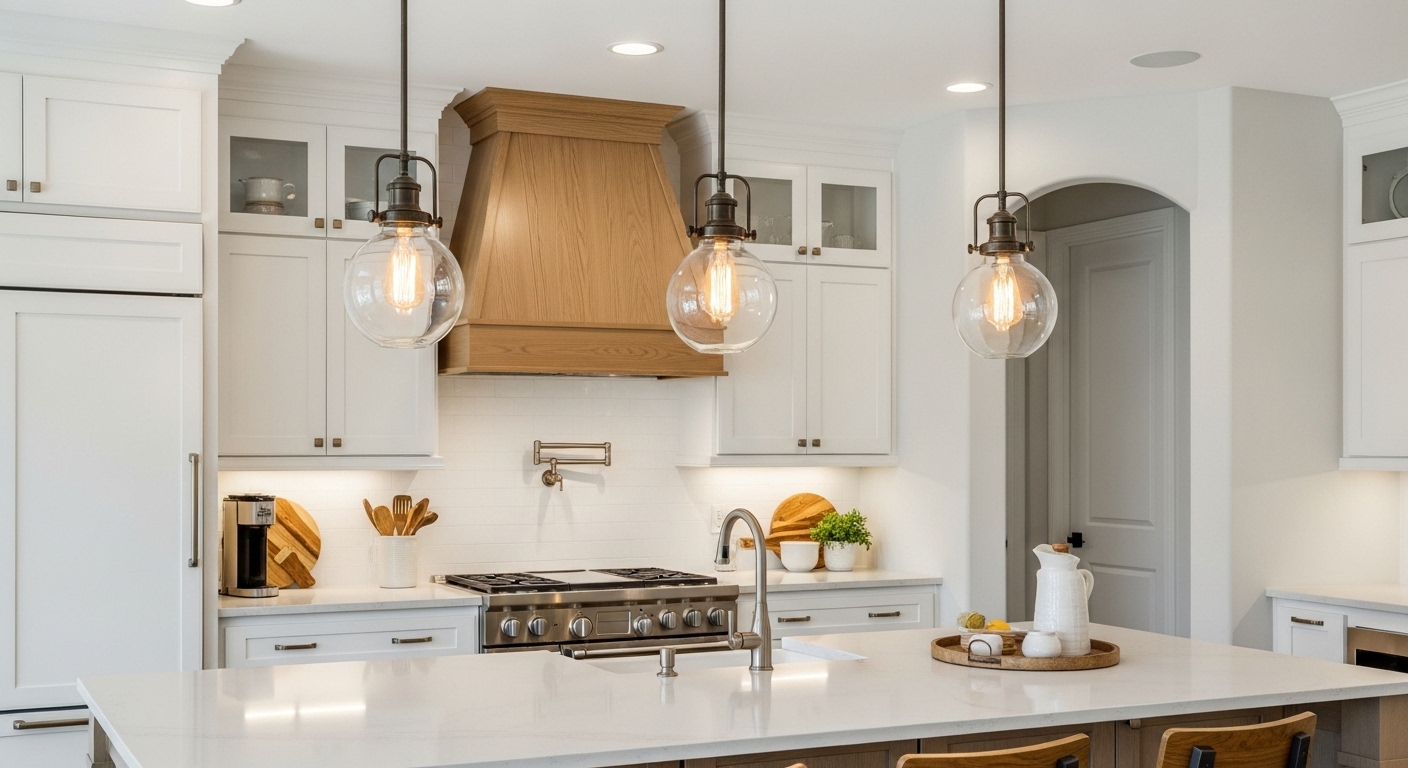
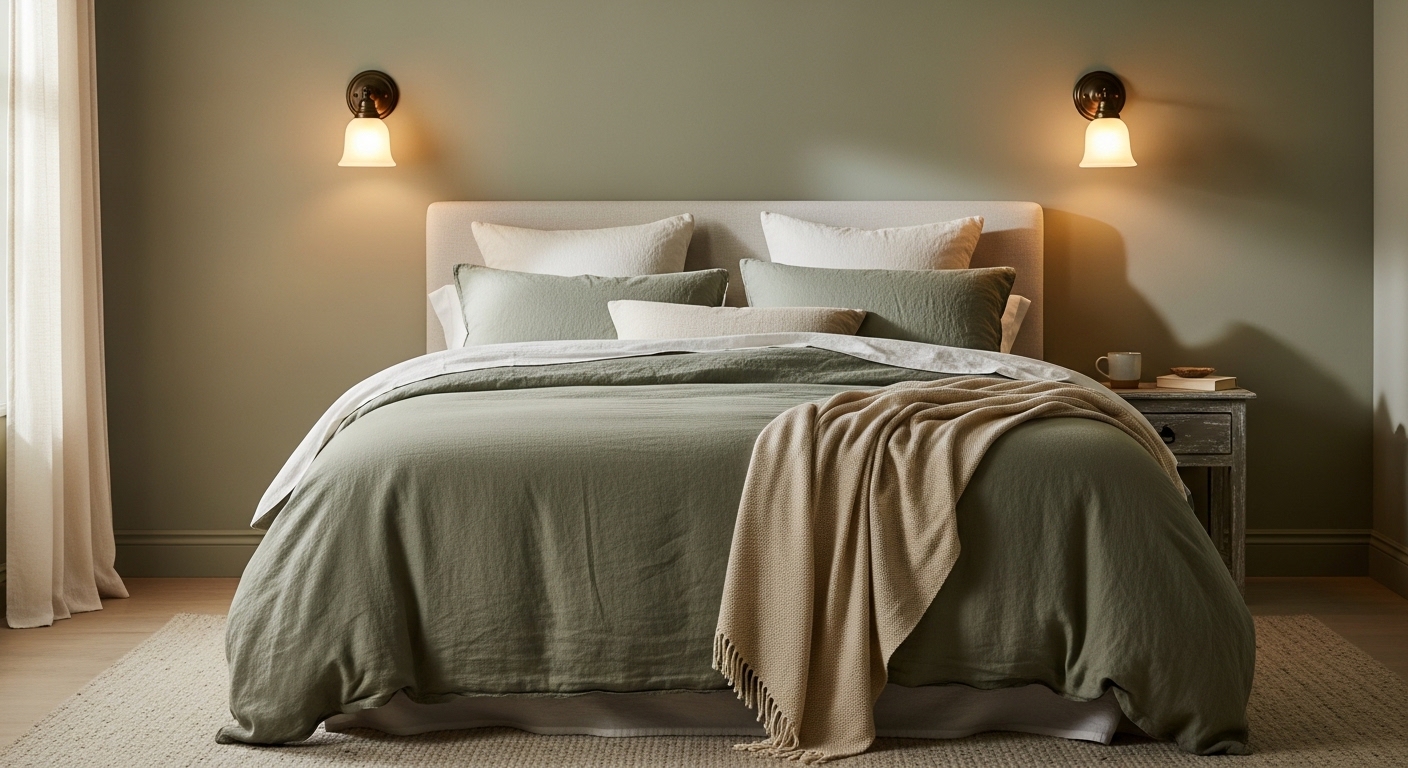
Living room: one steel or glass anchor, a rectangular sofa in a plain wool or linen, a round or rectangular table, two wall sconces, one primary, a textured rug, and space around everything; if the sofa is against the wall, that's fine, it's a ranch. Dining room: a plain table in one wood, chairs with visible structure (tube, cantilever, or a simple bentwood), a single pendant with a geometric shade at 30 inches above the table, nothing on the table but a bowl. Bedroom: a low bed with a flat headboard or none, wall sconces instead of table lamps, one wood for the nightstands, white linen, and the primary color, if any, in one blanket. Office: this is where the steel chair lives, with a flat desk, a task lamp on an arm, and a wall light; the geometry earns its keep in a room where everything has a function anyway. Kitchen: flat-front cabinets, a tube-and-globe pendant, and restraint on the counters, which is the style and also just good practice. Hall: a row of identical sconces at 64 inches, a bench, hooks in a line.
Where the style came from, and why it's back
The furniture we call Bauhaus was mostly designed between 1925 and 1930 by a handful of people at the school and in its orbit, and it was meant to be cheap and mass-made. It wasn't, for a long time; the licensed reproductions are expensive and the originals are museum pieces. What's changed is that the forms are simple enough that good unlicensed versions exist at a fraction of the price, that steel and glass photograph well on small screens, and that after a decade of rooms stuffed with cushions and macramé people want a chair that's a chair. It's the same reason my project management brain likes it: the room has a spec, everything in it meets the spec, and you can tell at a glance what's doing what. The danger of a style with a spec is that it can meet it and still not be somewhere you'd want to sit, which is where the texture and the light come in, and where I got it wrong for two months.
What I'd buy again and what went to the office
Buy again: the globe lamp, the wall sconces, the wool rug, the single red cushion, and the dimmer, which is the least Bauhaus purchase on the list and the one that made the style livable. Went to the office: the steel chair, because one anchor piece per room is the number, and the living room already had the lamp. Wouldn't buy: the glass coffee table, which we didn't, because a seven-year-old and a glass table are a study in edge protectors. The room now has one steel object, one glass object, one wood, one leather, one wool, one red, and warm light on all of it. It looks designed and it feels like a house, which is the whole trick of the style and the reason it's outlasted every other one from its century. Function first, then warmth, then stop.
Shop this post: Bauhaus-inspired wall lights and modern wall sconces