A minimalist living room, in practice, is a room where every object on a surface has earned its place, the surfaces are mostly empty, and the light falls on the few things that remain so they look chosen rather than sparse. Last January I found out what that means by clearing every decorative object from the main floor of our 1964 ranch and living with ten items for a month, having given away or sold about sixty objects to get there. About sixty percent of what I cleared never came back. The rooms looked larger, cleaning took half the time, and the things that remained felt more present because they weren't competing. This post is the ten items and why those ten, what I missed and what came back, the two surprises, the rules that survived the month, the minimalist living room specifically with the furniture, the surfaces, the walls, the textiles and the light, the difference between minimal and empty, the storage that makes minimal possible, the version with a nine-year-old in the house, what it cost and saved, mistakes, and the ratio I use now.
The ten items
A large ceramic vase in the living room, on the floor by the fireplace. A wooden cutting board on the kitchen counter. The corner plant, the monstera. Two framed photographs in the hallway, counted as two. The one cookbook on the kitchen shelf. A small stone sculpture on the coffee table. A woven basket under the console. Candles on the dining table, counted as one. A plant in the bathroom. Ten, chosen in an hour on New Year's Day by walking the main floor and asking of each object whether I'd buy it again today; the sixty that failed went into boxes in the garage, and the boxes went to the thrift store in February, unopened, which is the test.
What I missed, and what came back
Almost nothing, which was the surprise. Two things came back: a painting whose absence left a conspicuous blank wall above the sofa, and a bowl I'd thought was decorative but which turned out to hold the things from my husband's pockets every evening and which, without it, ended up on the counter. Four more things came back over the spring, a lamp, a second plant, a throw, a tray, each one because a specific problem appeared without it. Fifty-four objects didn't, and I can't name most of them now, which tells you what they'd been doing.
The two surprises
The rooms looked larger, not by a little; the living room felt as if a wall had moved, because the eye could travel across it without stopping. And the things that stayed became visible: the vase, which had been one of nine objects on and around the fireplace, became the fireplace's object, and people who had never mentioned it in three years asked where it was from. Ten things in a house aren't ten things; they're ten things you see, which is the difference between a house with objects and a house with sixty.
The rules that survived the month
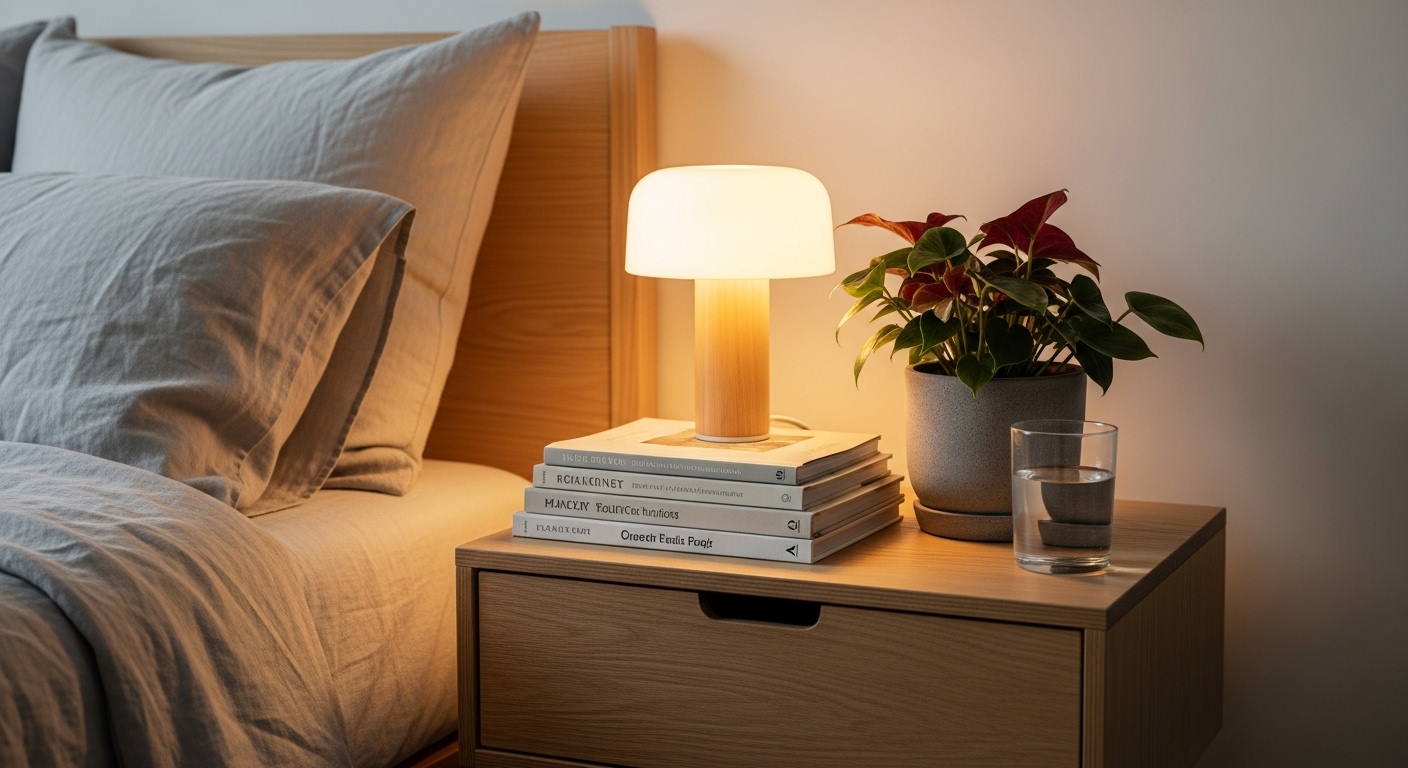
Five objects per surface at most, and most surfaces at one or none. One object per surface that's alive or once alive: a plant, a branch, a bowl of fruit, a candle. Nothing on a surface that isn't used or looked at daily. A thing comes in only if a thing goes out. Every decorative object must be something I'd buy again today. And the light must fall on the object, from the side, so it reads as chosen; a single vase under a ceiling light is a vase in a shop, and the same vase lit by a sconce is a still life. The last rule is the one that turned the month into a way of living rather than a purge.
The minimalist living room: furniture
A sofa, two chairs that don't match it, a coffee table with storage, a console behind the sofa, a floor lamp, and nothing else on the floor. The side tables went, and the magazine rack, and the second floor lamp. Fewer, larger pieces, with space between them, and every piece in one of three materials, oak, linen, wool, plus the black steel of the lamp. A minimalist living room isn't a room with tiny furniture; it's a room with the right amount of normal furniture and no small things around it. The coffee table post is why the table has drawers, which is the piece of furniture that makes the empty surface possible.
The surfaces
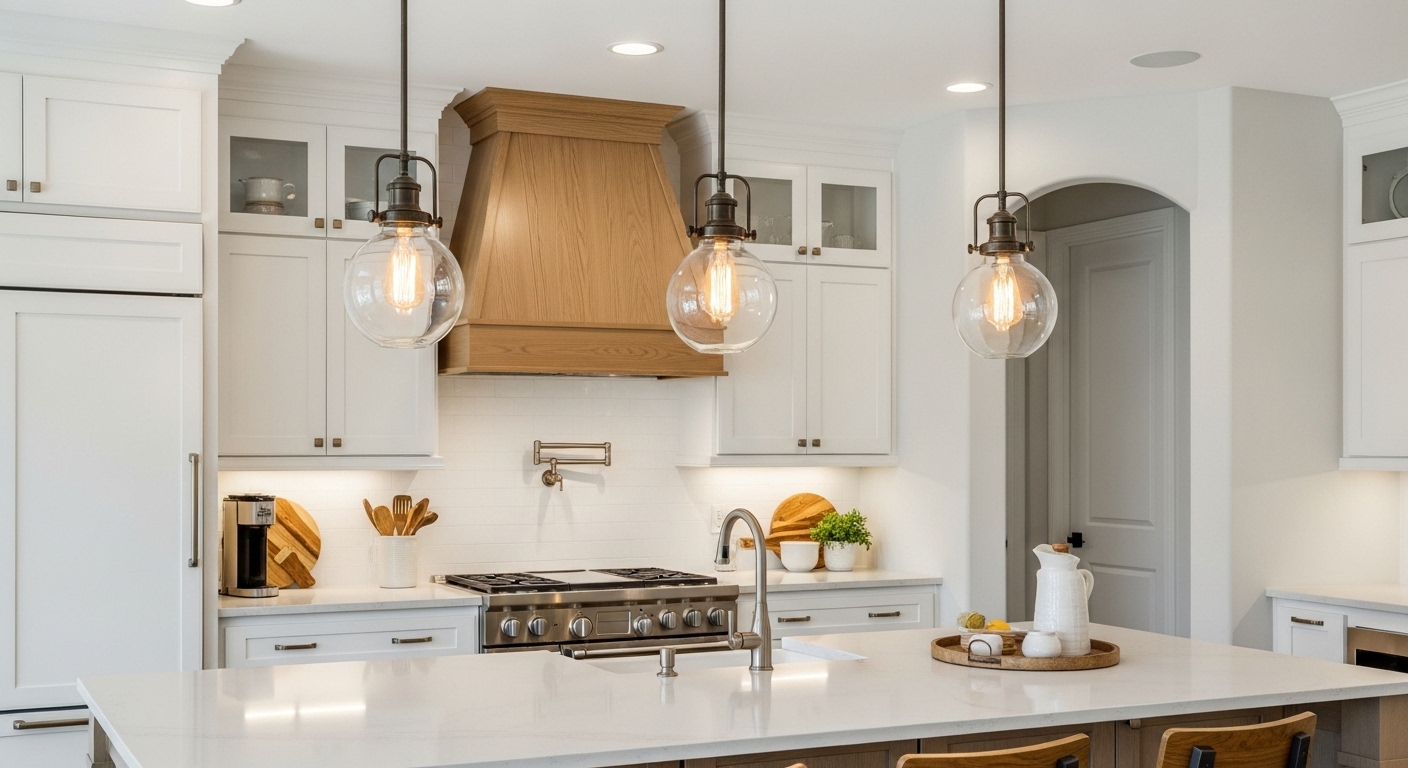
Coffee table: the stone sculpture, and on weekends a book. Console: the basket underneath and nothing on top but the lamp. Mantel: the vase on the floor beside it and nothing on it, which took nerve. Windowsill: nothing. Dining table: the candles. The kitchen counter: the board, the cookbook, and the kettle, which is a tool and doesn't count. The rule of five is a ceiling and most surfaces are at one; an empty surface with one good thing on it is the whole look, and it's free.
The walls
One painting above the sofa, the one that came back, at 58 inches to center. The two photographs in the hall. Nothing else on the main floor's walls, and the walls are the same warm white they were, which reads as a decision now that nothing is on them. A gallery wall in a minimalist room is a contradiction; one large piece per room, or none, and the sconces do the rest of the wall's work by lighting it. The art post is how the one painting was chosen, and it's the only art on the floor.
Color, in one paragraph
Three or four muted tones drawn from the materials, oatmeal, grey, oak, the black of the lamp, and one deeper color in one place, a rust throw; the walls a warm white. Fewer objects means each color counts more, and a bright object in a minimal room is the object, whether you meant it to be or not.
Textiles and the light, which keep minimal from being cold
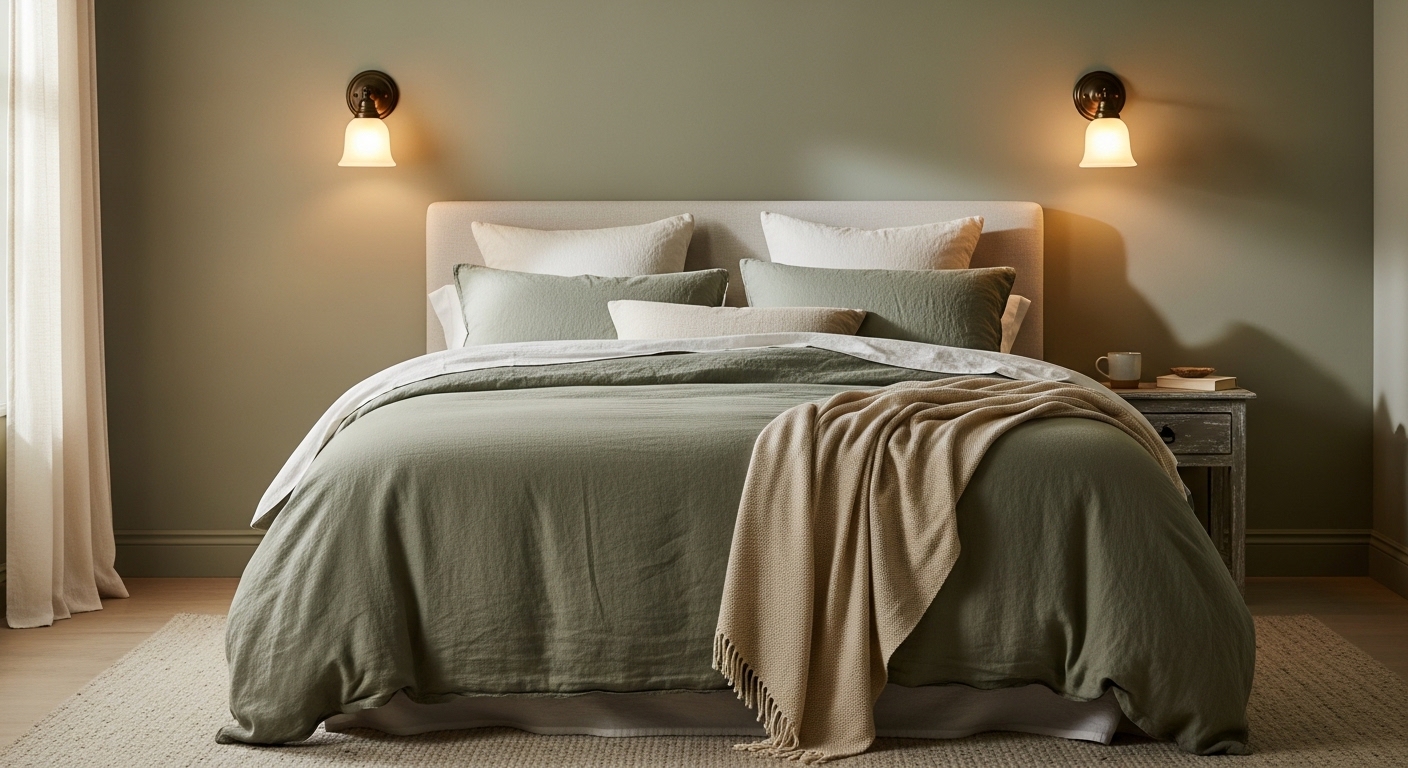
The risk of a minimalist room is a cold one, and the two things that prevent it are texture and light. A wool rug, a linen throw over one chair, linen curtains: three textiles, natural, matte, in tones of oatmeal and grey. And the light: two wall sconces flanking the fireplace at 62 inches, the floor lamp by the reading chair, a lamp on the console, all 2700K on dimmers, and the ceiling light off after dark. Side light on a wool rug and a linen throw makes a nearly empty room feel warm; a ceiling light on the same room makes it feel like a waiting room. The living room sconce post is where the sconces went, and they're the reason the room with ten things in it doesn't feel like a room with nothing.
Minimal versus empty
Empty is a room with nothing in it and nothing to look at. Minimal is a room with a few things in it that you look at, because they're good, they have space around them, and the light is on them. The difference is in the quality of the few things and the quality of the light, not in the count: ten mediocre objects under a ceiling light is a waiting room, and three excellent ones lit from the side is a home. One excellent ceramic piece does more work than five mediocre ones, and the month was mostly finding out which of the sixty were the excellent ones. There were about six.
The storage that makes it possible
Nobody lives with ten objects; they live with a thousand, and minimal is where the other 990 go. Ours go in the coffee table's drawers, the console's cabinet, the basket, the hall closet, a bench with a lid by the door, and the pantry. Closed storage within ten feet of where each thing is used, or the thing ends up on a surface. The month worked because the storage existed before it started; a purge without storage is a purge that reverses in a week.
With a nine-year-old in the house
Her room is hers and the rule doesn't apply there. On the main floor: one basket for what she's using this week, which lives under the console and gets emptied to her room on Sundays; the art she makes goes on the fridge and rotates; and the rule that a thing comes in only if a thing goes out applies to her too, which she has turned against my husband's mugs with some success. A minimalist main floor with a child is possible if the child has a room that isn't, and a basket.
What it cost and saved
Nothing to do, a Saturday and some boxes. The sixty objects sold or given away brought in about $400 at the consignment shop, which bought the wool rug. Cleaning takes half the time, which is a real number in a house with a child and a maple that drops on the porch. And nothing has been bought for a surface since January except the throw and the tray, which is the saving that keeps compounding. The one purchase that made the month possible was earlier and separate: the sconces, which are the light that makes ten things look like a choice.
How to do the month yourself
Pick a floor, not the whole house. On day one, walk it with a box and take every decorative object off every surface into the box, including the ones you're sure about. Put back ten, chosen by the would-I-buy-it-today question, one per surface at most. Tape the box shut and put it somewhere you can't see. Live thirty days, and write down each thing you go looking for; those come back. On day thirty, open the box, and everything you'd forgotten goes to the thrift store the same day, because a second look is where the sixty come back. Then turn the ceiling light off and put a lamp beside the thing you kept, and look at it.
The minimalist living room on a budget, and in a rental
This is the cheapest room in the house to make, because it's made by removing. What costs money is the light, and two plug-in sconces on strips at 62 inches with plug-in dimmers are $130 and go with you; a secondhand wool rug is $100; a linen throw is $60. A rental living room with a landlord's furniture becomes minimal by clearing its surfaces and adding two sconces and a rug, and the landlord's sofa in a room with three objects and side light looks like a choice. The only thing you can't fix by subtraction is the ceiling light, and you fix that by not turning it on.
Mistakes
Clearing the bowl that held the pocket things, which created a mess to fix a mess. Clearing the painting, which left a wall that looked like a hole. A week in which I over-corrected and cleared the plant too, and the room went from minimal to sad. And boxing everything without photographing it, so that when the boxes went to the thrift store I couldn't remember what I'd owned, which was the point and was also alarming.
In one paragraph
Clear the surfaces, put back the few things you'd buy again, give the rest away unopened, keep closed storage within ten feet of where things are used, add three natural textiles, and light the few things from the side with the ceiling off. Minimal is a count and a light, and the light is the part people skip.
The ratio I use now
For every surface, one to three objects, never more than five. For every room, one thing that's the point. For every object, the question of whether I'd buy it today. For every sixty things, about six worth keeping. And for every object that stays, a light that falls on it, because minimal without light is empty and minimal with light is the room I'd been trying to make for ten years by buying more.
Shop this post: wall sconces and modern wall sconces, the light that makes a few things look chosen