People ask me how I get the Scandinavian look without Scandinavian prices, and the honest answer is that I don't try to replicate a catalog page. I've never bought a piece of actual Scandinavian-made furniture. What I try to do is understand what makes the aesthetic work. The materials, the proportion, the restraint. And then source for those qualities at every price point available to me in Portland. Some things can only be done right with money. A lot of things can be done very well for very little.
Our home has been in progress for about three years. I do one room at a time, usually spending three to six months on each before I'm happy with it. My total budget for the whole house has been around $14,000 spread over that period, about $4,700 per year, which sounds like a lot until you break it down and see how much of it was functional (new kitchen countertops, plumbing updates) versus aesthetic. The pure design budget for each room has been significantly smaller than most people guess when they see the result.
The 60/30/10 Color Rule: The Foundation of Scandinavian Palette
Before talking about budget at all, I need to talk about color, because the color decision is where most people go wrong and where spending money won't help you. Scandinavian interiors achieve their calm, coherent quality through proportion of color, not through particular colors.
The rule I follow: 60% of the room's color comes from the dominant neutral (for me, warm white on walls and ceiling. I use Benjamin Moore White Dove throughout). 30% comes from the secondary color, usually expressed through furniture and larger textiles (natural oak and linen in cream or warm gray). 10% comes from the accent color. The one deliberate pop that gives the room personality without overwhelming it.
My accent color in the living room and bedroom is sage green, which is both an aesthetic choice and a nod to where I live in the Pacific Northwest. Sage appears in a single throw pillow on the bed, in a ceramic vase on the console, in the linen curtains in the living room. 10% is exactly enough to feel intentional without feeling like a theme. The moment I added a fourth sage element to the bedroom, a small sage-colored tray on the dresser. The room tipped from balanced to overdone. I took the tray out.
This color discipline costs nothing and makes everything else work better. A well-edited neutral room with a clean 60/30/10 proportion will look more Scandinavian than a room full of expensive Danish furniture without color restraint.
The IKEA Baseline Strategy
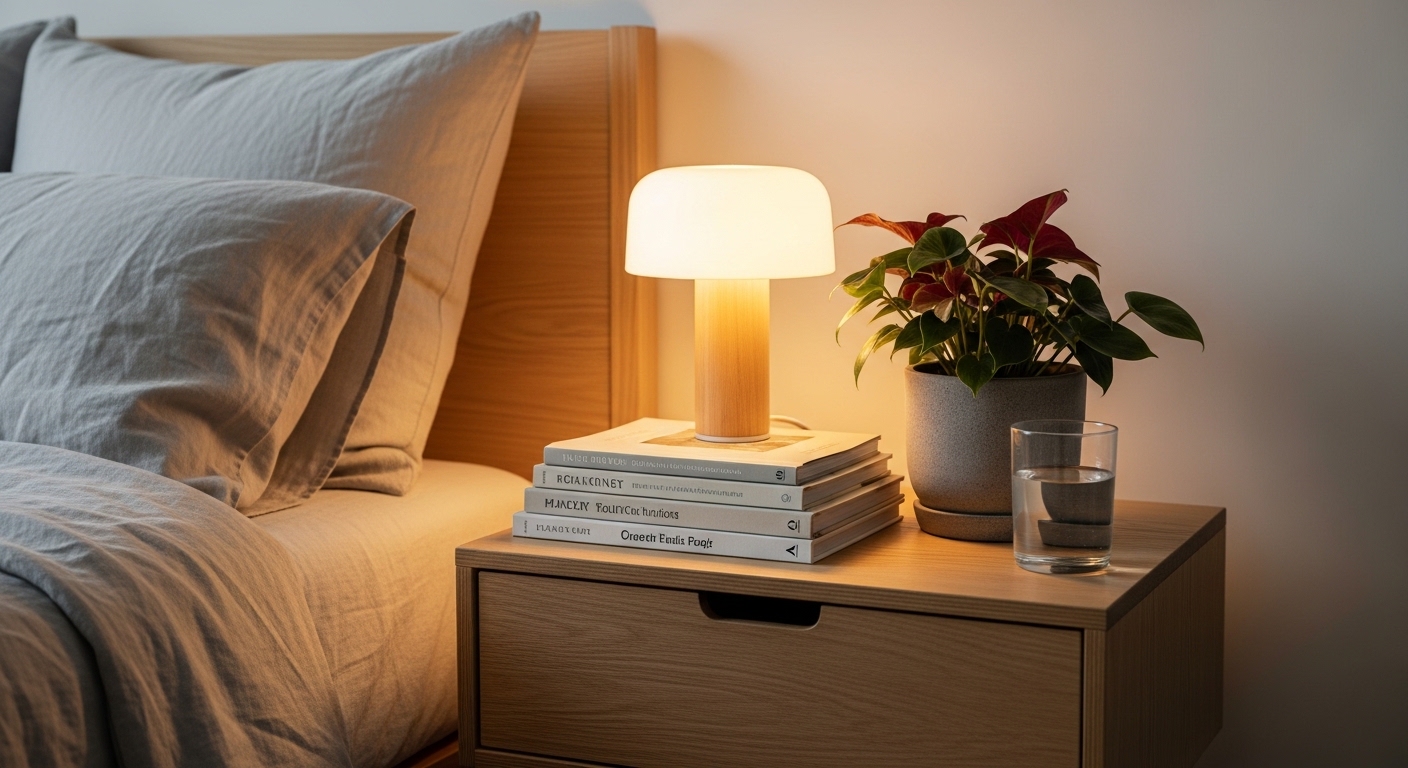
I use IKEA as my structural baseline. Bed frames, dressers, bookshelves, basic storage, IKEA does these well at prices that leave budget for everything else. The HEMNES line in particular has a clean, slightly traditional Nordic character that reads naturally in a Scandinavian-inspired room. I have the HEMNES dresser in white in our bedroom ($299), the HEMNES nightstands ($129 each), and the KALLAX shelf unit in the living room ($149).
None of these pieces are remarkable on their own. What makes them work is what surrounds them. Put a beautiful brass lamp on the HEMNES dresser, style the KALLAX with edited objects and good books rather than clutter, and the pieces read as intentional and considered rather than as budget solutions. IKEA's proportions are generally right for Scandinavian aesthetics. The lines are clean, the finishes in the lighter wood and white options are genuinely Scandinavian in character. The pieces don't fight the aesthetic; they support it without dominating it.
Where IKEA fails: seating. The IKEA sofa options are uniformly mediocre in terms of comfort and visual character. A Scandinavian-inspired room with a bad sofa has a bad sofa, no amount of well-chosen accessories will fix it. This is one of the categories where I recommend spending properly.
Where I Spent More: Splurge Categories
The categories where I've consistently spent more than I initially wanted to, and where I don't regret any of it:
Lighting
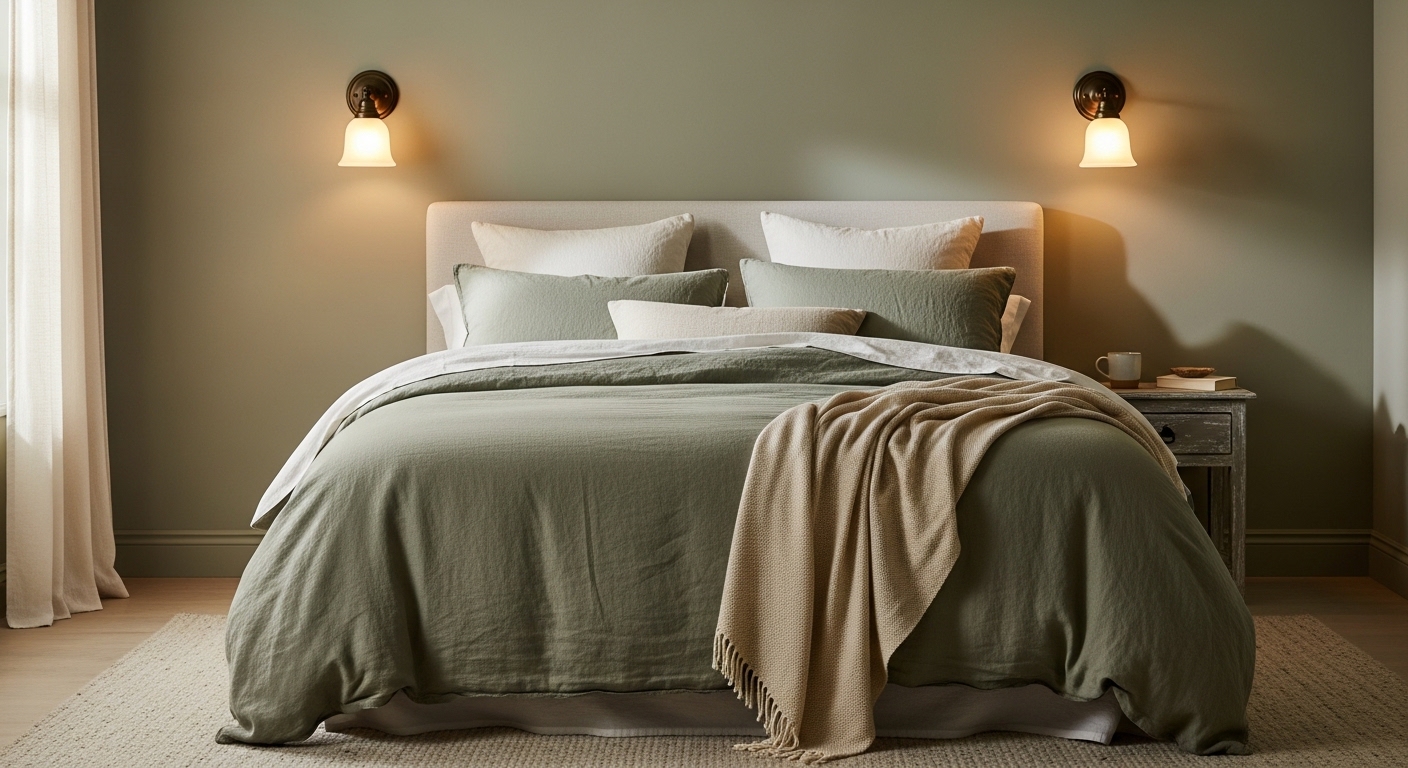
Lighting is the single category where I've spent the most relative to alternatives, and the one where every dollar has been most clearly worth it. A beautiful light fixture changes a room. You look at it every day. It's on the wall or ceiling indefinitely. A $300 sconce that you love for ten years costs $30 per year. A $40 sconce you find mediocre costs $4 per year and makes you slightly unhappy every time you see it.
I've bought all of our sconces and pendant lights from BO-HA's contemporary lighting collection. The Scandinavian design sensibility in their pieces, clean lines, natural materials like wood and glass, restrained hardware, fits the aesthetic I'm building exactly. The Asne adjustable wood wall light in our living room reading corner is one of the best purchases I've made. It has a birch wood arm and a warm linen shade, completely natural materials, adjustable for reading, and it photographs as if it cost twice what I paid. The Livianna glass wall lamp in the primary bathroom does something similar. The frosted glass and simple form read as understated quality.
I cover the specific lighting decisions in detail elsewhere on this blog. For the bedroom sconce logic, read my post on wall sconces vs ceiling lights. For the finish decision, brass vs black, read my post on choosing a lighting finish for each room.
The Sofa
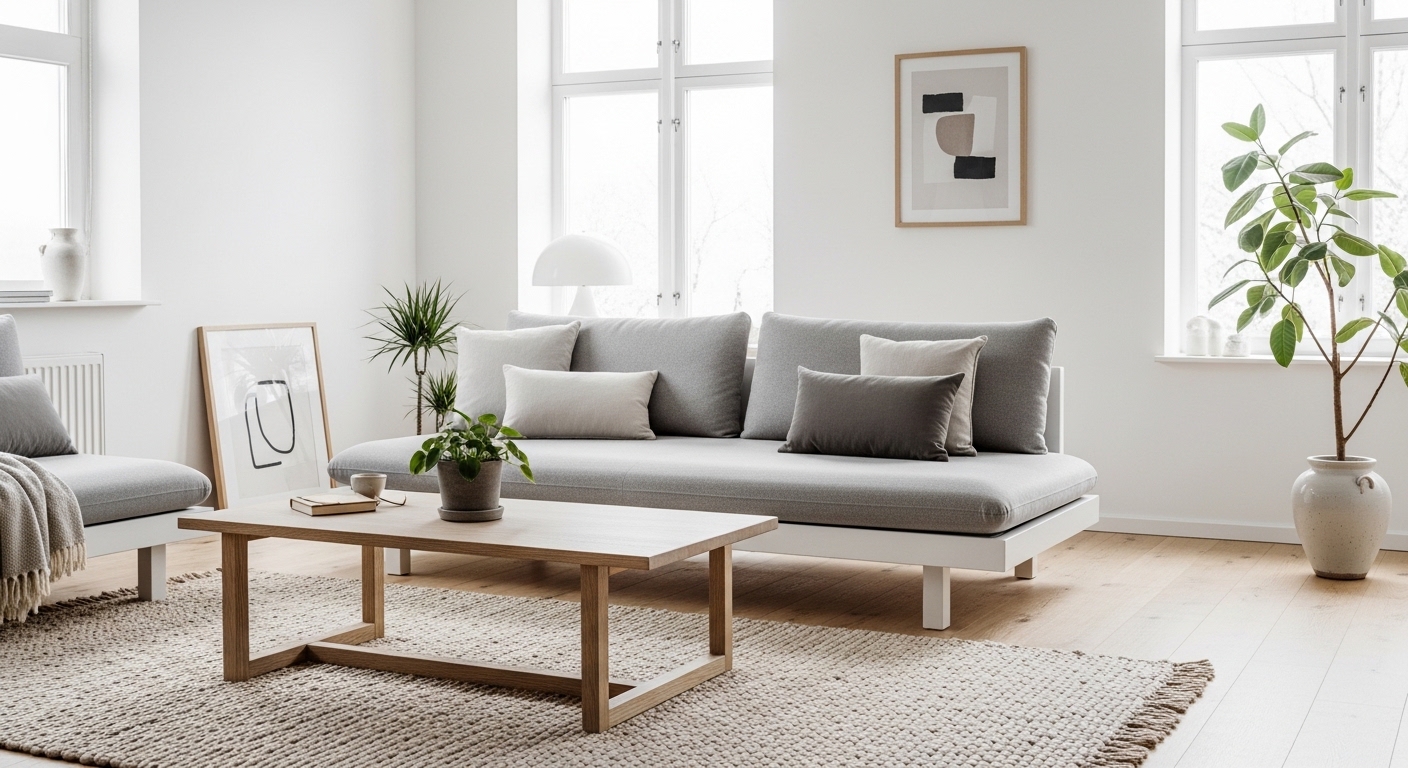
I spent $1,400 on our living room sofa, a cream-colored linen sofa with tight, clean lines from a small Portland furniture maker called Woodblock. It's not a famous brand. But the fabric is good, the cushions hold their shape, and the proportions are right for the room. That sofa is the single most-viewed object in our home. It had to be right.
The Bed Frame
The bed frame is the second most structurally important piece in a bedroom, its proportions set the room's proportions. I have an oak platform bed frame from a local maker, $680, which was at the top of what I wanted to spend, but the natural oak finish and the low-profile silhouette contribute to the bedroom character in a way that the IKEA equivalent wouldn't. Combined with the HEMNES nightstands on either side, the bed looks like a considered set without having been bought as one.
Where I Saved: Budget Categories
Textiles
Throw blankets, accent pillows, bath towels, table runners. These are all categories where I buy affordably and frequently. A linen throw from TJ Maxx looks identical to a linen throw at three times the price. The texture and the color do the work, not the brand. I replace textiles more often than any other category because they wear, they get stained, and they're an easy way to shift a room's mood with the seasons. Spending less per piece means I can refresh them without guilt.
For the 30% secondary layer in each room. The large pieces that carry the room's secondary color. I source from IKEA (GURLI throws in natural gray, $12.99) and thrift stores. Portland has excellent thrift infrastructure. I've found linen curtain panels, wool area rugs, and a Marimekko throw blanket (an actual Finnish textile, in perfect condition) all at secondhand stores within a few miles of our house. The Marimekko throw cost $18. In a Scandinavian-inspired room, an actual Finnish textile thrifted for $18 contributes more to the authenticity of the space than a mass-produced "Scandinavian style" item bought new at $80.
Decorative Objects
Ceramics, candles, small vases, wood objects. These read as high quality when they're simple and well-chosen, regardless of price. I buy ceramics from local Portland makers when I want something specific (the Alberta Arts District Saturday market is where I shop for this), and I buy small candles and basic glass objects from IKEA or HomeGoods. The IKEA VARDAGEN cast-iron and enamel pieces look Scandinavian because they are. The design language is exactly right. And they cost almost nothing.
The key to making budget objects look intentional: edit ruthlessly. Five well-chosen objects on a shelf look like a hand-picked collection. Fifteen affordable objects look like clutter. Scandinavian interiors are spare by design. That restraint is achievable at any budget, but it requires discipline about what you keep.
Plants
Plants are the Scandinavian element that genuinely can't be faked or upleveled with budget. A $12 pothos in a simple white ceramic pot contributes as much to the Scandinavian atmosphere of a room as a $200 fiddle leaf fig in a designer planter, often more, because the simple, unfussy plant reads as more genuinely Nordic than the status plant does. I have about fifteen plants throughout our house. My total investment in them is probably $150, including pots. They are collectively the single most impactful element in the home's atmosphere for the money I've spent.
Room-by-Room Actual Budget Breakdown
| Room | Total Design Budget | Biggest Splurge |
|---|---|---|
| Living room | $2,100 | Sofa ($1,400) |
| Bedroom | $1,650 | Bed frame ($680) |
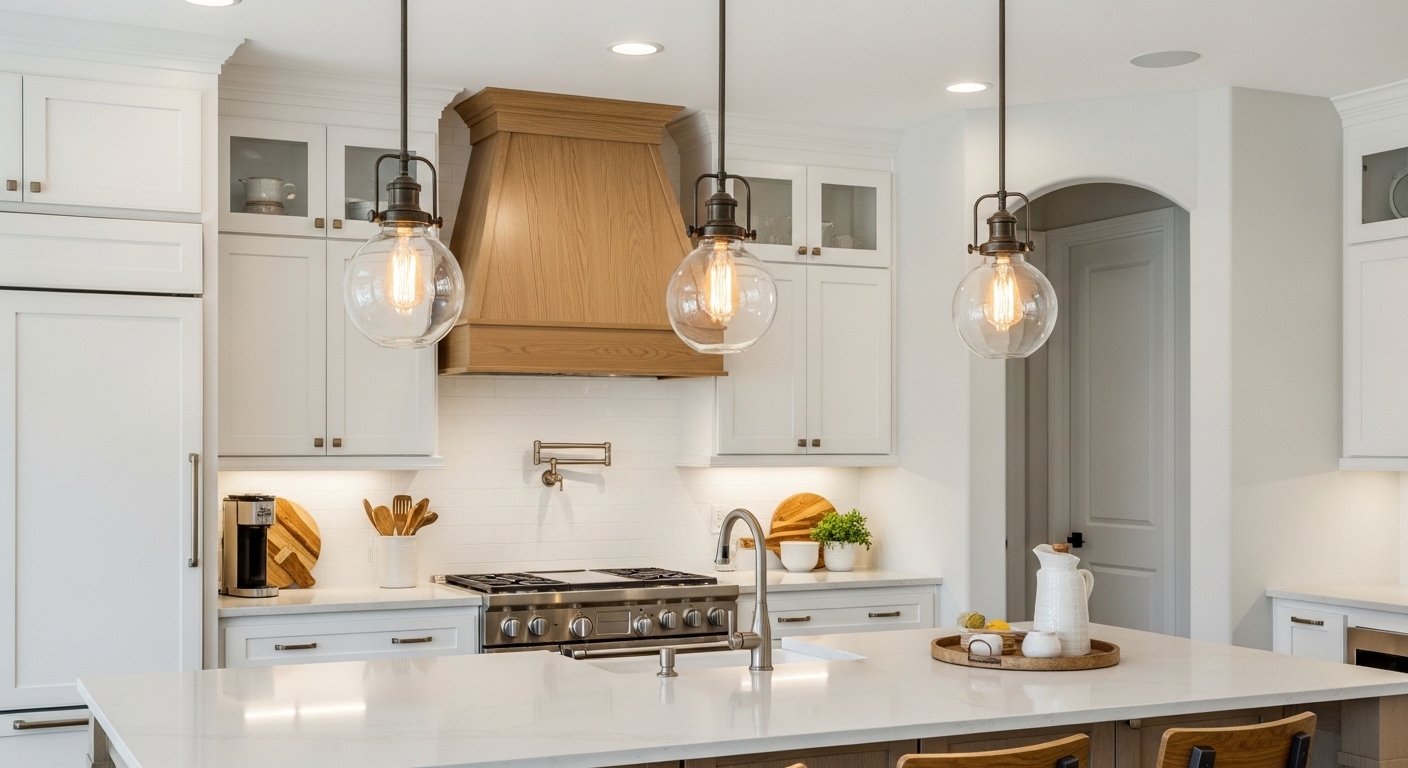
| Kitchen (aesthetic updates) | $890 | Pendant lights ($248) |
| Entry | $310 | Pendant + mirror ($186) |
| Primary bathroom (aesthetic) | $620 | Sconces ($218) |
| Total (aesthetic design) | $5,570 |
Reading across that breakdown, lighting is consistently the second or third largest single expenditure in each room. And in the bathroom and entry, it's the largest. This reflects my actual conviction that lighting is the category where design investment has the highest return per dollar in a home interior. The sofa is more expensive, yes. But the lighting affects how everything in the room looks and feels, including the sofa.
The wall sconce collection at BO-HA is where I've bought the majority of our fixture lighting. The Scandinavian design influence in their pieces. The use of glass, wood, and clean brass hardware, is genuinely aligned with what I'm trying to build, not just superficially similar. That alignment is why the pieces cohere across rooms rather than competing.
For anyone starting a Scandinavian-inspired redesign, the recommendation I'd give is: get the color proportion right first (60/30/10), use IKEA for structural pieces where the design is already right, spend on lighting and seating, source textiles affordably and refresh them often. The aesthetic is about restraint and quality in a few key places. It doesn't require buying everything expensive, and in fact buying too much expensively works against the spare, edited quality that makes the style recognizable.
This post connects directly to the lighting decisions covered in my posts on kitchen island pendant lights and the finish questions explored in my post on brass vs matte black lighting. For more on achieving the Scandinavian bedroom specifically, my post on wall sconces vs ceiling lights covers the lighting decisions that changed our bedroom most.
Quick Answers
Q: What is the 60/30/10 color rule for Scandinavian design?
The 60/30/10 rule divides a room's color into three proportions: 60% dominant neutral (walls, ceiling, warm white in most Scandinavian rooms), 30% secondary color (large furniture and textiles, natural oak, linen, cream), and 10% accent color (a single deliberate pop, sage green, dusty terracotta, or muted blue). The ratio is what creates the calm, coherent quality of Scandinavian interiors, not any particular color, but the discipline of how much of each appears.
Q: Is IKEA furniture good for Scandinavian interior design?
Yes, for structural pieces where the design language is already right. The HEMNES and KALLAX lines in particular have genuine Nordic character. IKEA fails for seating (the sofas are neither comfortable nor characterful enough to anchor a room) and for anything you'll look at as a design statement. The strategy: use IKEA as the structural baseline and spend the freed budget on lighting, the sofa, and the bed frame, where quality and proportion make the most difference.
Q: What should I splurge on vs save on for Scandinavian design?
Splurge on lighting fixtures, the sofa, and the bed frame, pieces you see every day that set the room's quality signal. Save on textiles (throw blankets, pillows, curtains, texture and color matter more than brand), decorative objects (simple ceramics and glass read well regardless of cost), and plants. The most expensive individual item in a well-done Scandinavian room is rarely the piece that makes it look designed.